Sunnyside Yard Master Plan
Client
New York City Economic Development Corporation
Location
Queens, NY
Year
Master Plan Complete 2020
Program
Mixed-Use
Size
184 Acres
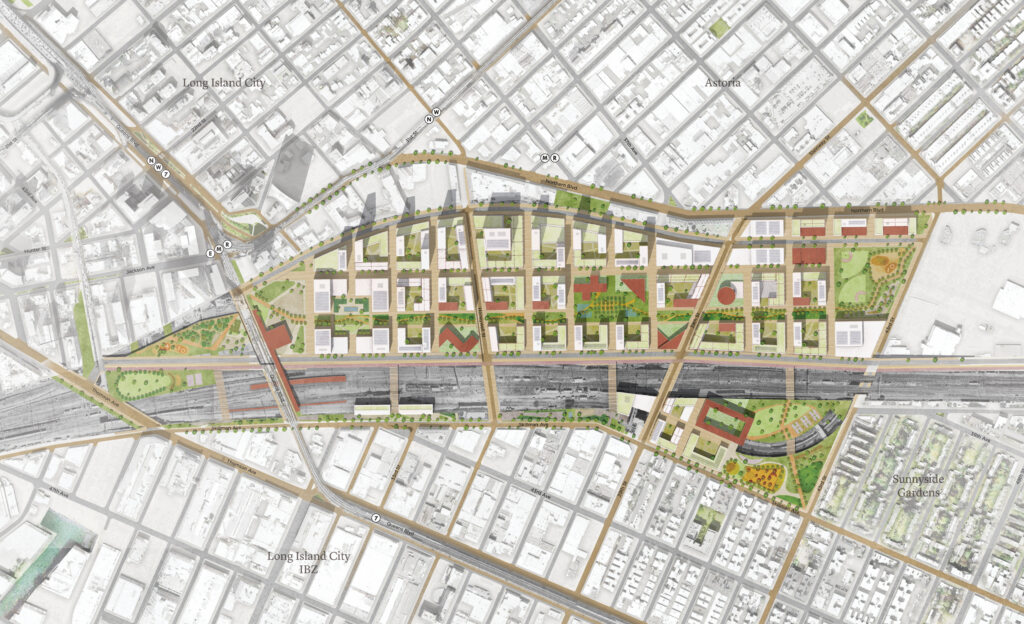
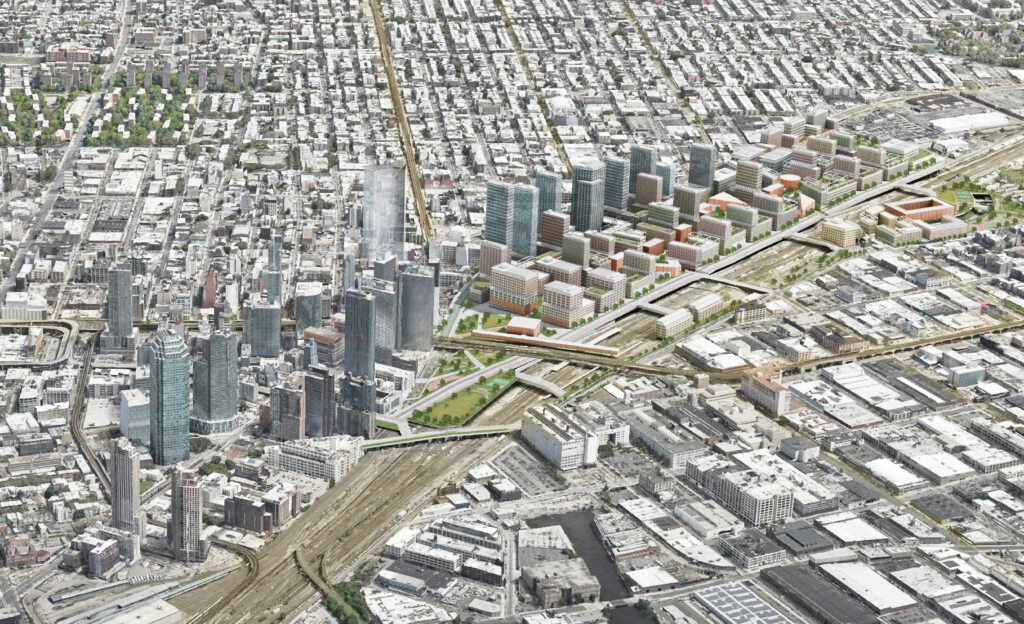
Sunnyside Yard as it exists today is a profound gap in our city’s fabric. Based on a previous feasibility study that proposed very tall point towers be placed wherever foundations could be poured between complex track layouts, the City of New York subsequently engaged a planning team led by PAU, who strongly believed that there had to be a different approach: a long-term vision that could better respond to the surrounding neighborhoods and create a pedestrian-scale street grid. PAU handpicked an interdisciplinary team that included stakeholder engagement experts; engineers specializing in rail, structures, geotechnical analysis, environmental planning and transportation; landscape architects; researchers who study the future of urban environments; finance specialists including experts in modeling, market analysis, cost estimation, risk analysis, and public finance; and legal advisors.
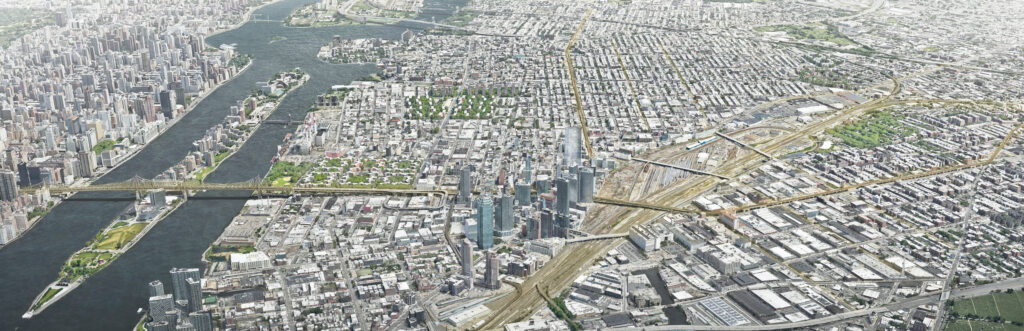
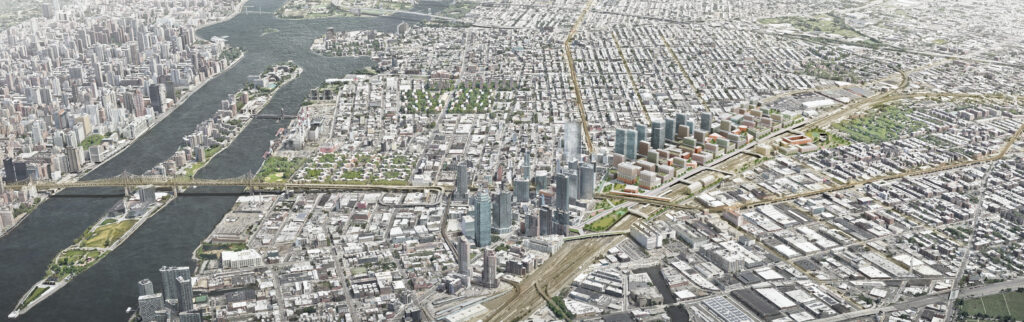
Current condition of Sunnyside Yard (Left) & master plan (Right)
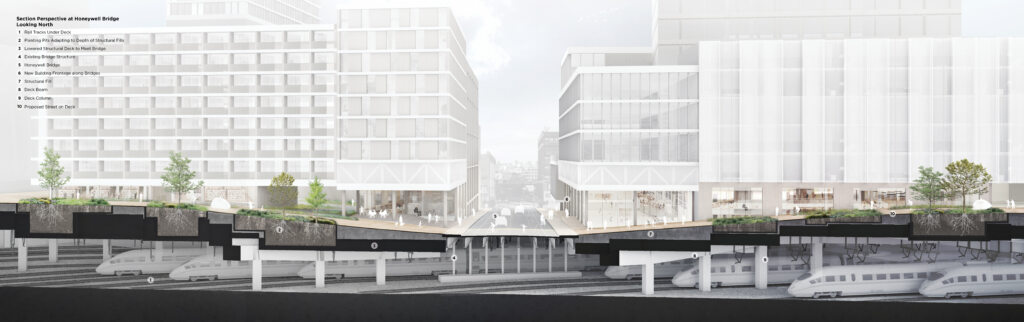
Section erspective at Honeywell Bridge
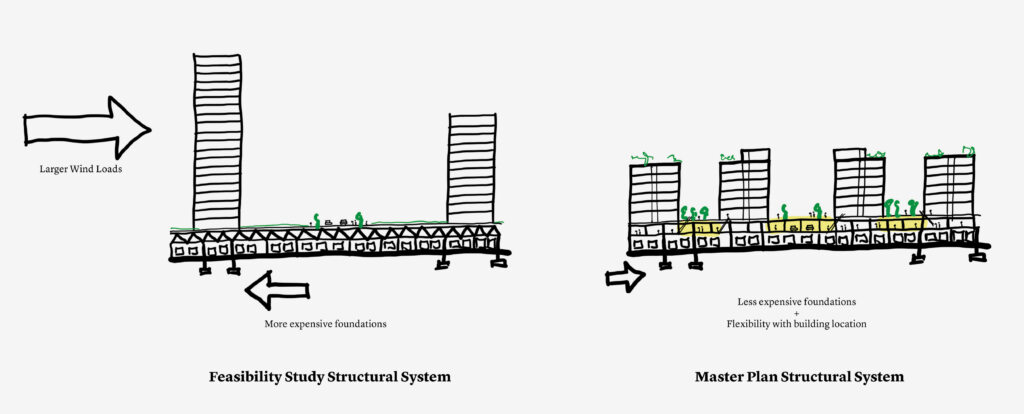
Structural system comparison between feasibility study & master plan
Overall site lan
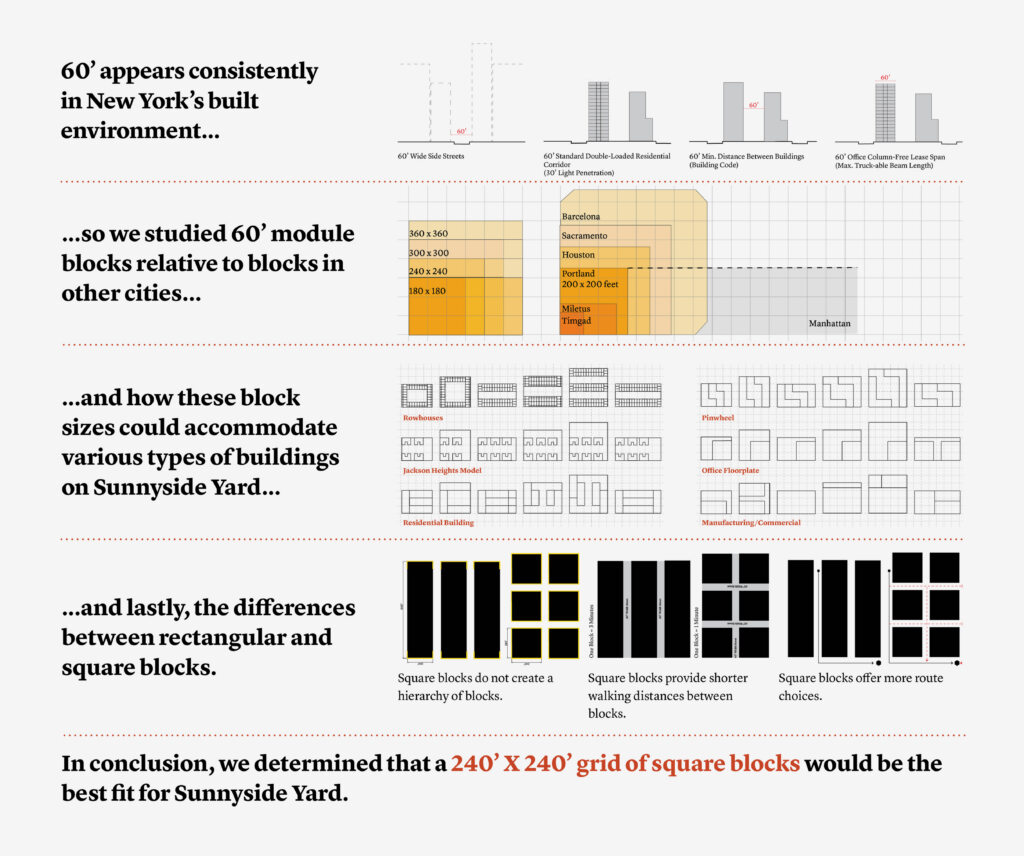
Streets & block size for walkability
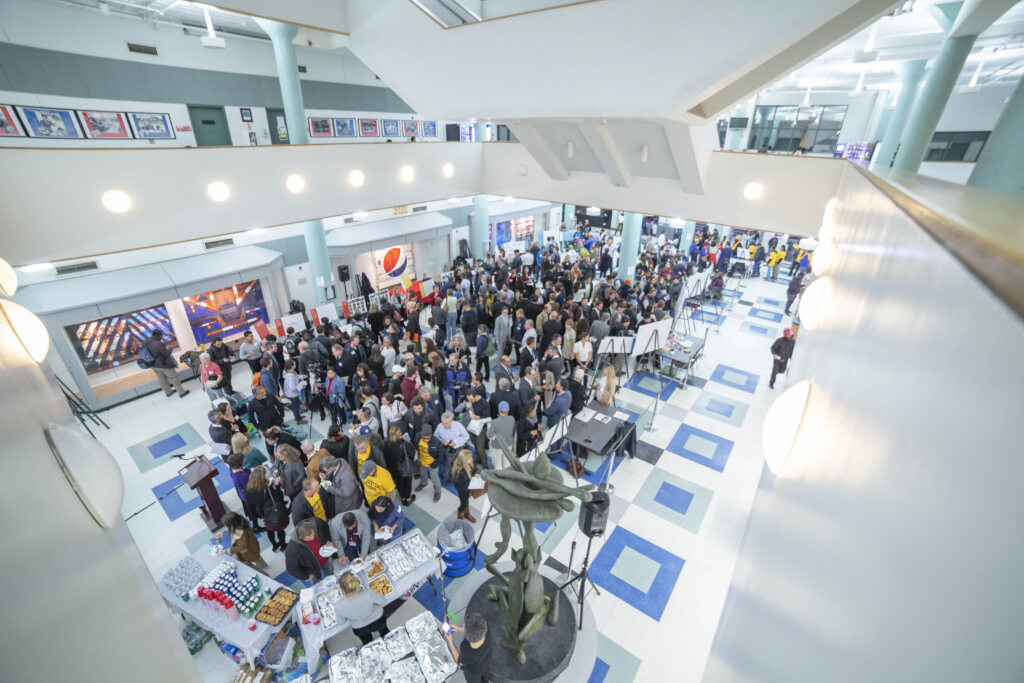
Public meeting at LaGuardia Community College (Photos courtesy of NYCEDC)
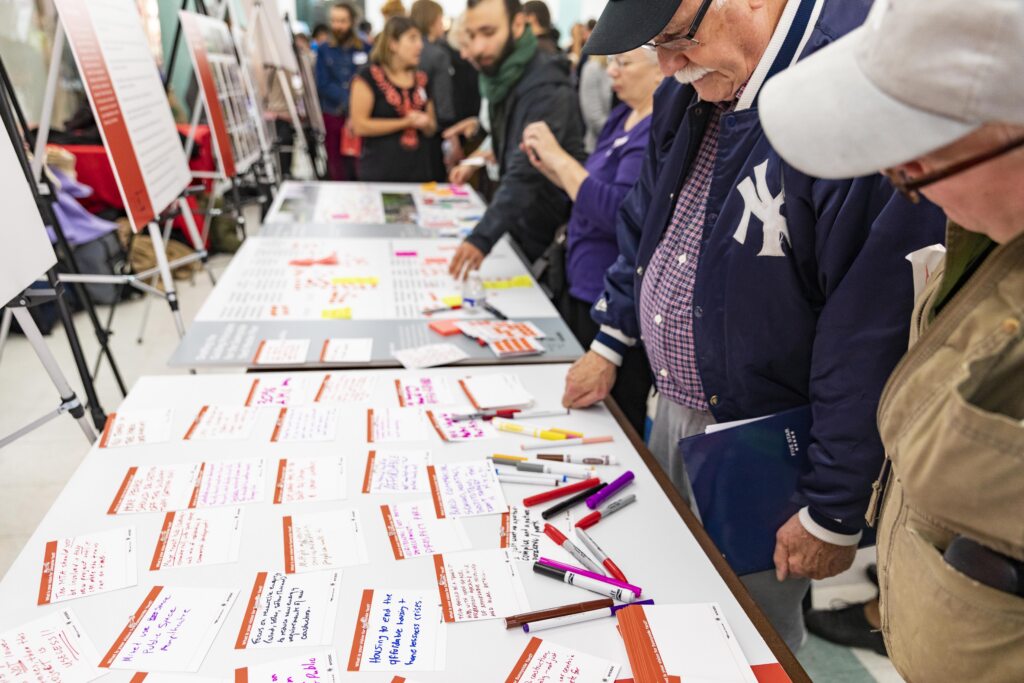
PAU also oversaw a robust stakeholder engagement effort to determine what to build. The resulting plan answers six pressing “needs” identified during the outreach process: creating open space and social infrastructure like schools, libraries and clinics; improving transportation and mobility; building truly affordable housing; creating workforce development opportunities; setting new green building standards; and perhaps most importantly, “keeping it Queens.”
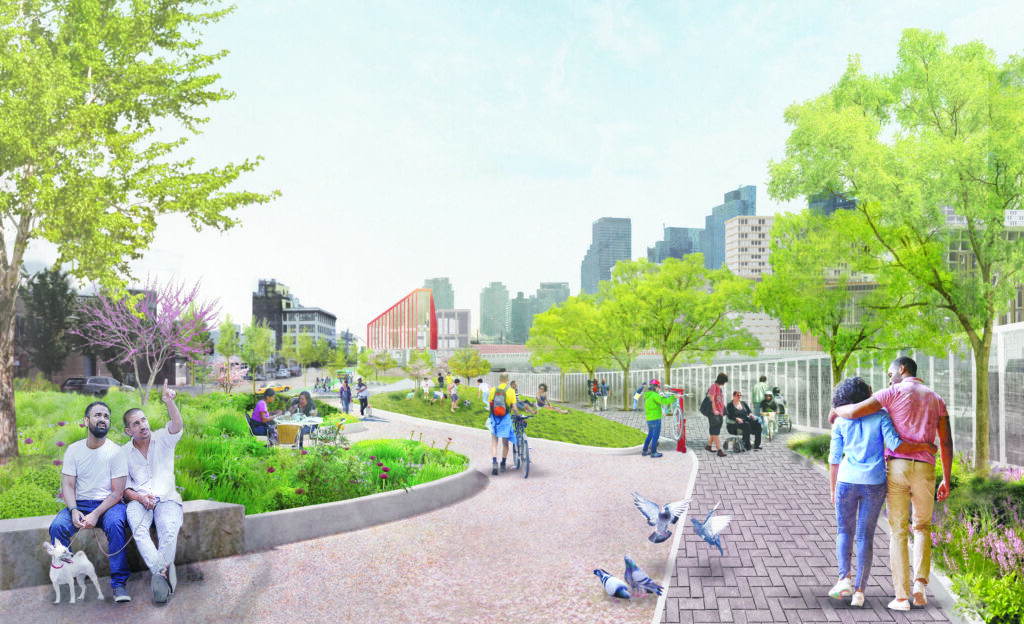
The plan is anchored by a central greenway lined with social infrastructure; the spine in a network of neighborhood-scale parks. A multi-layered transportation strategy envisions streets that prioritize pedestrians and quality of life over vehicles. Block-sizes were developed to respond to the scales of surrounding neighborhoods while accommodating many different program types and configurations.
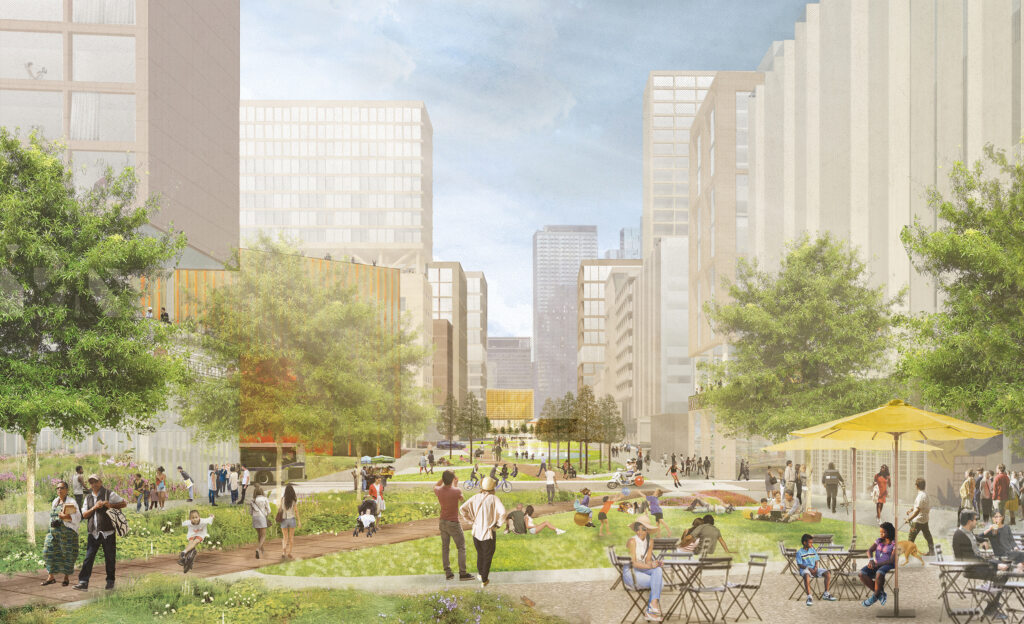
Central greenway
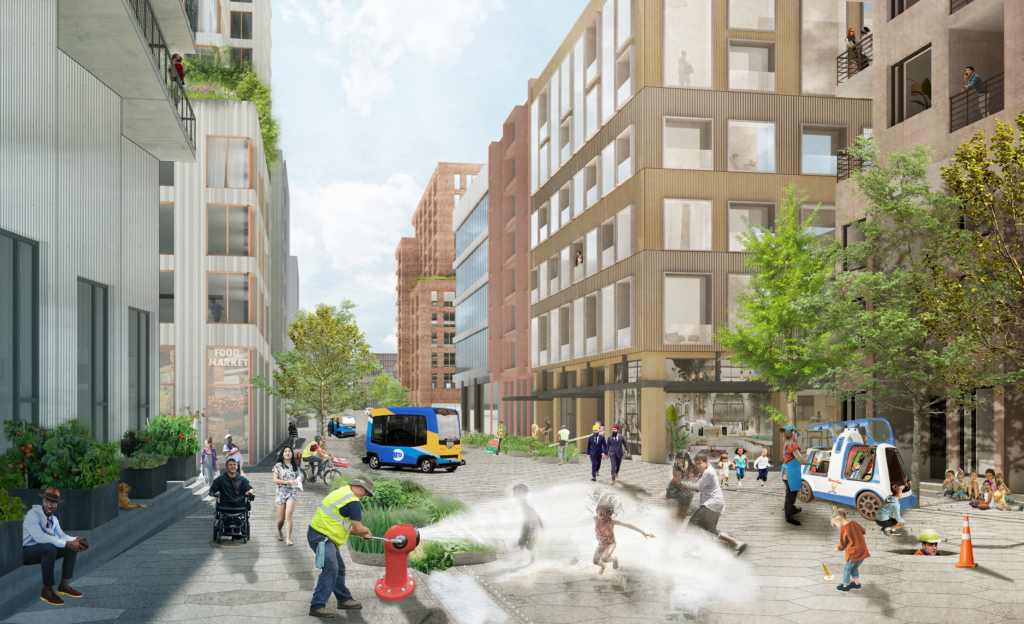
Interior street
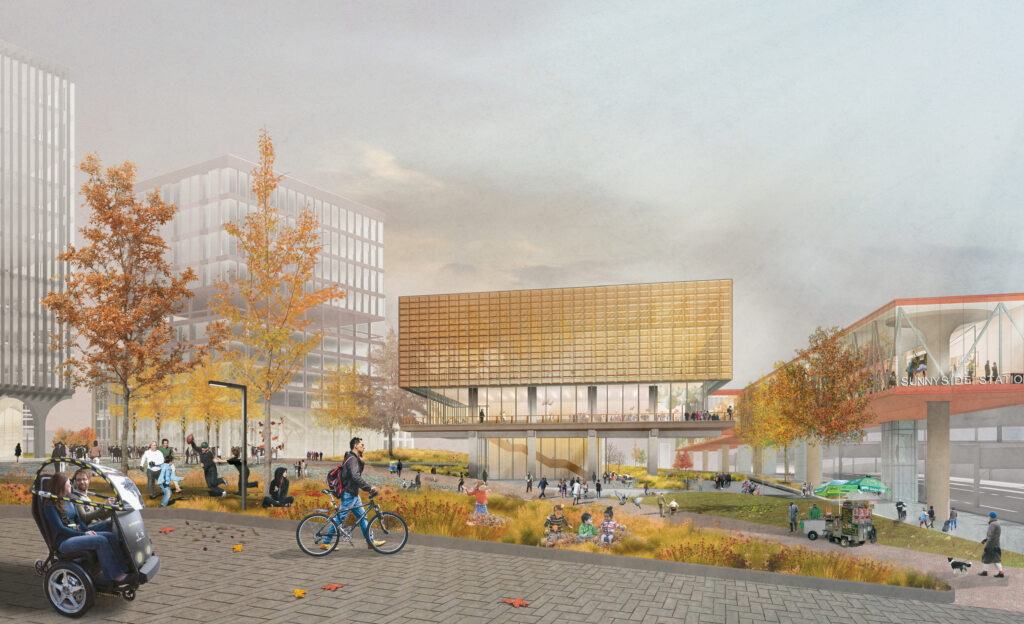
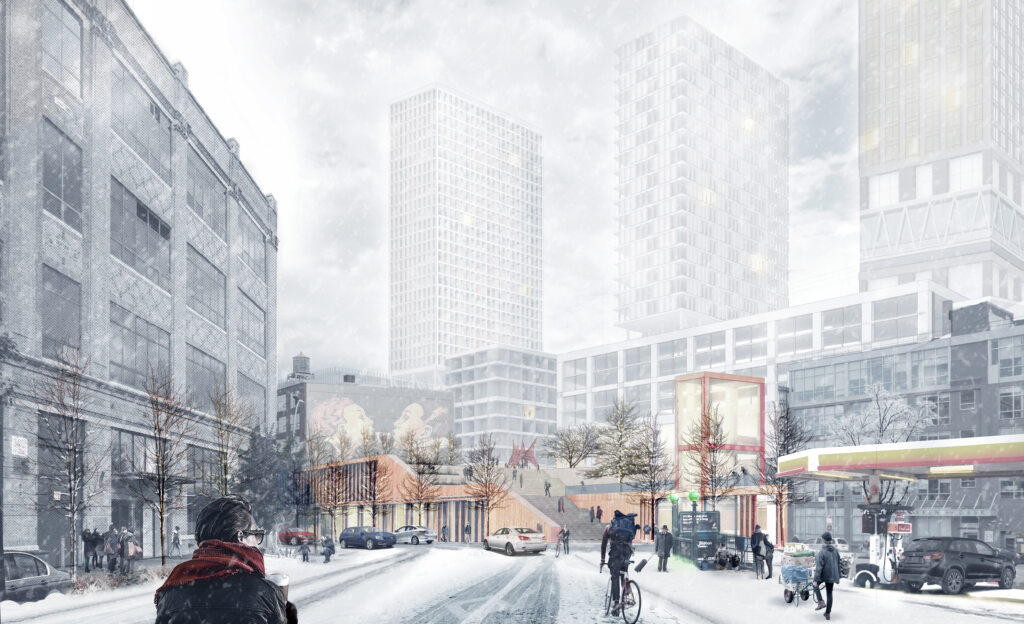
Civic hub at Queens Blvd
In a city where we know that land is so precious and so finite, here lies an opportunity to create more of it by creating the largest rail deck the world has ever seen. And then on top of that rail deck, more housing than we’ve seen since the construction of co-op houses and Co-op City”Zohran Mamdani
New York City Mayor
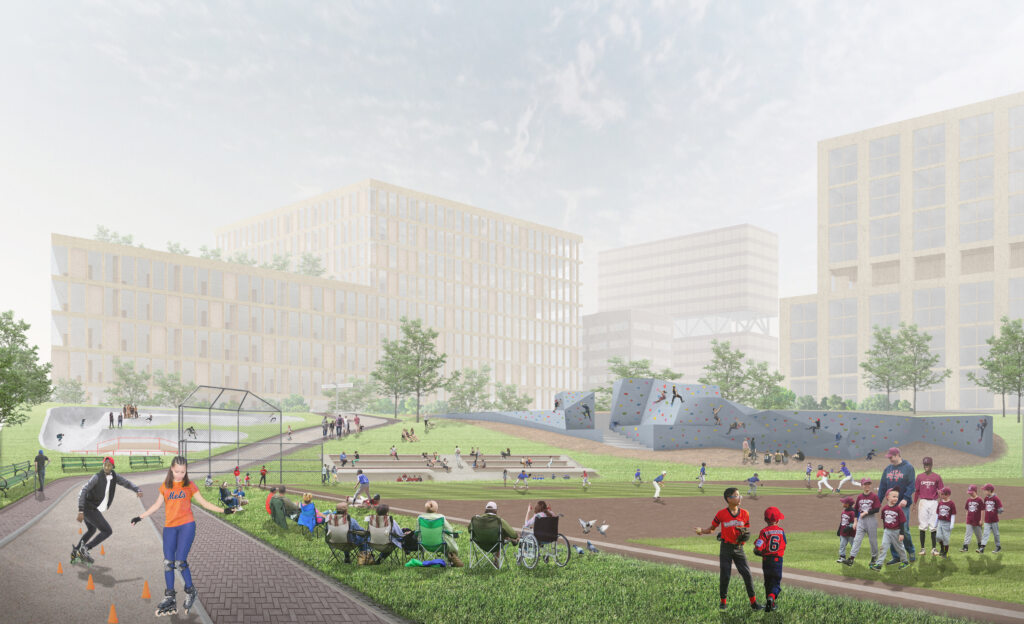
Eastern yard park
Skillman Ave park
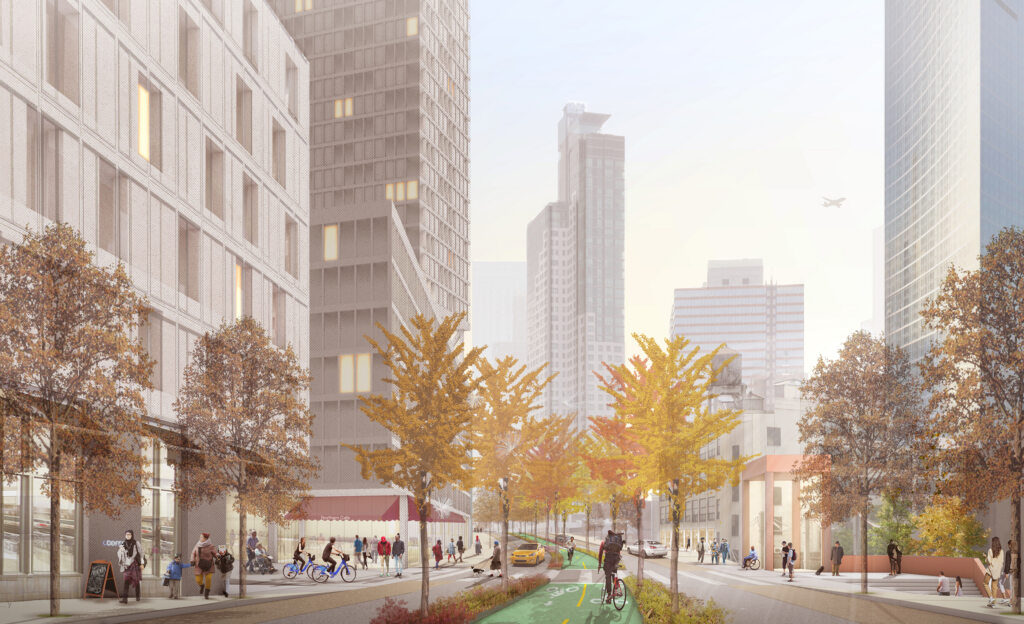
Northern corridor
Deck Access at 36th St
Collaborators
Design and Engineering: Carlo Ratti Associati, HNTB, Langan, Nelson Byrd Woltz, Sam Schwartz Engineering, Thornton Tomasetti
Finance and Legal: BJH Advisors, CBRE, Dharam Consulting, Fried Frank, Municap
Stakeholder Engagement: Kasirer, Urbane Development