Pennsylvania Station Renewed
Client
Halmar | Skanska
Location
New York, NY
Year
Ongoing
Program
Train Station
Size
~1.3 Million GSF
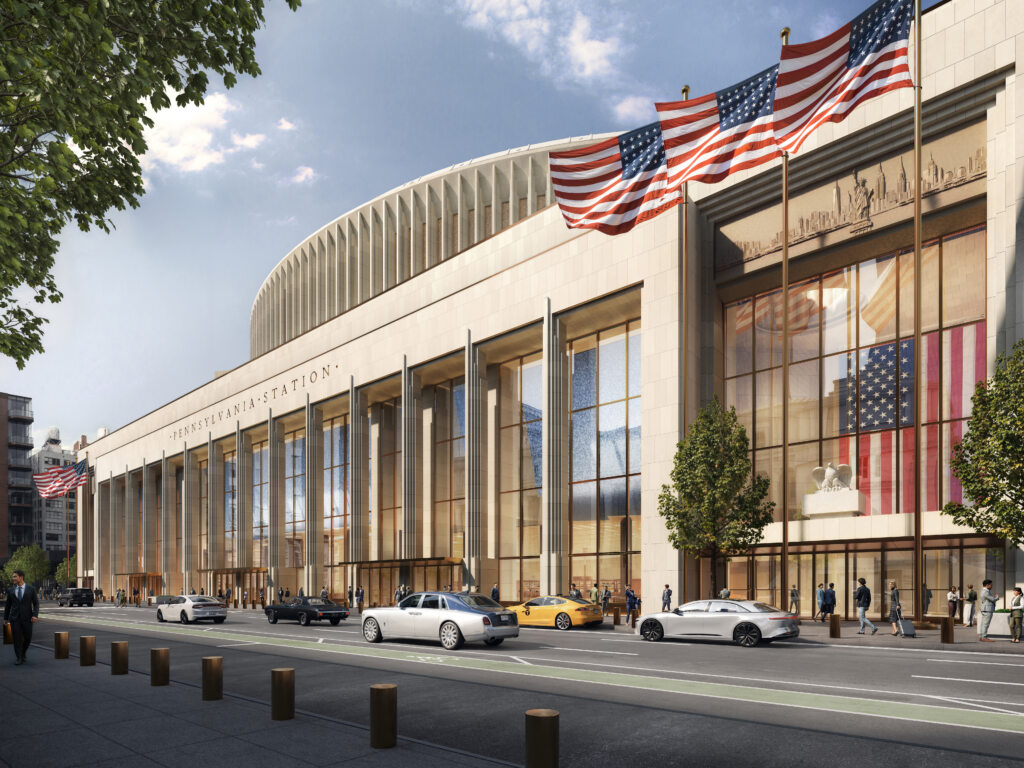
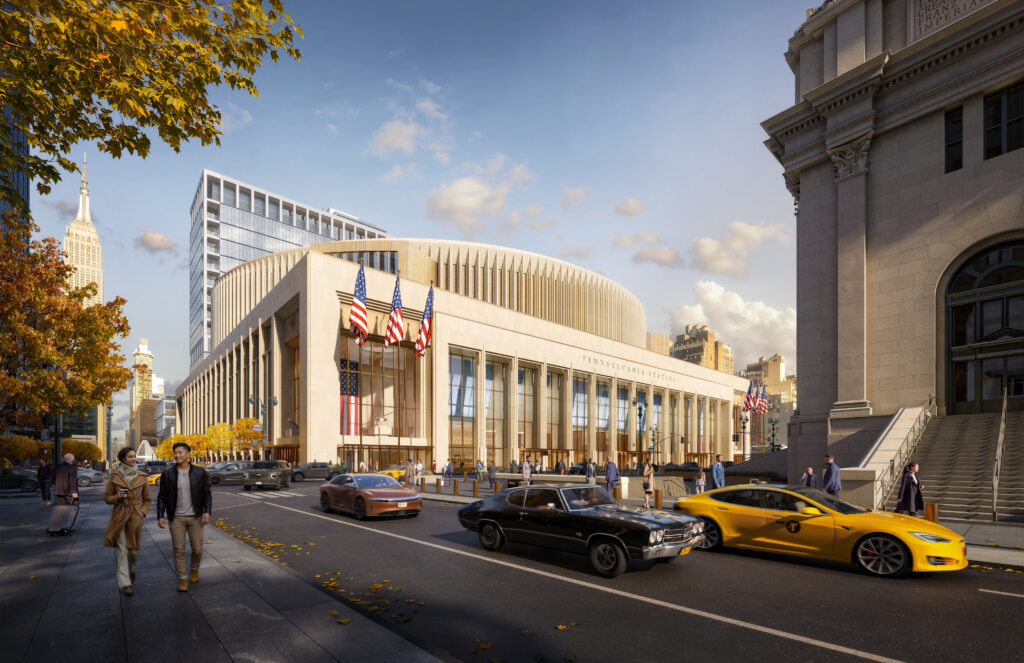
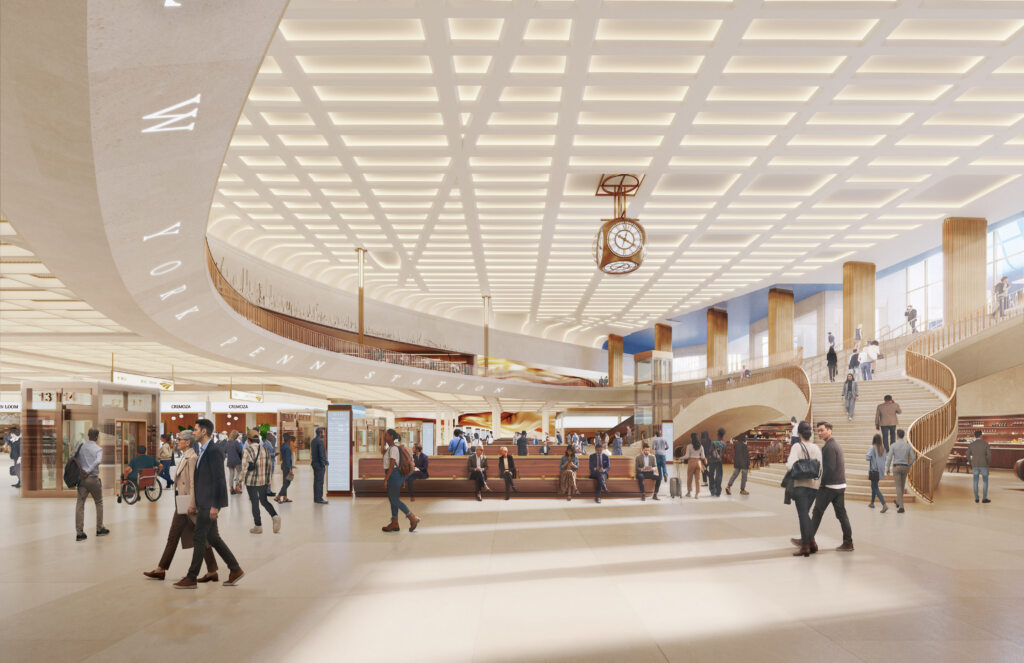
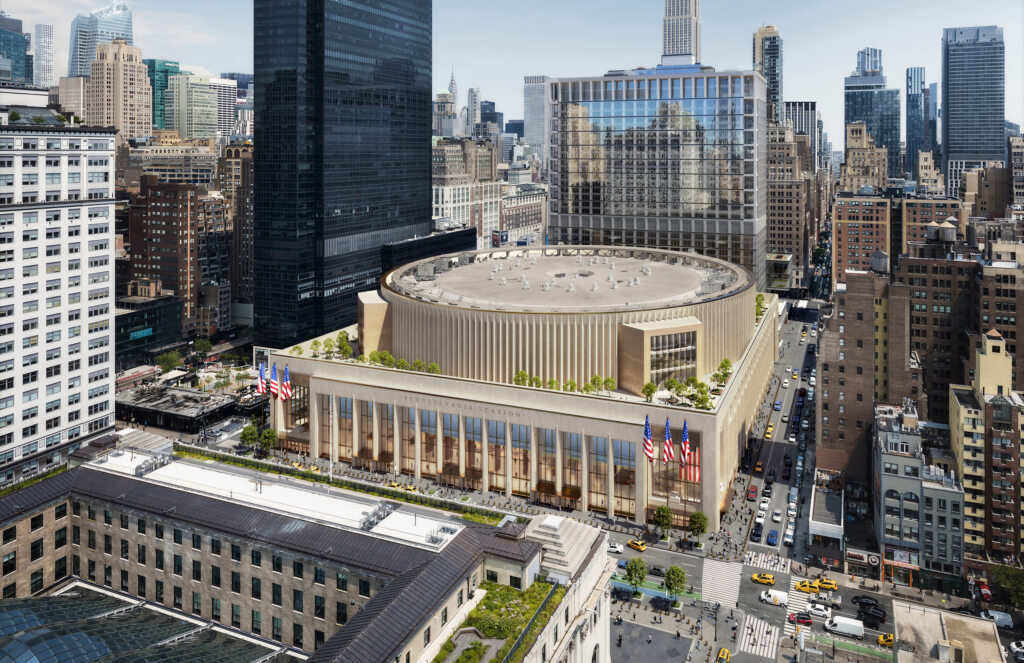
PAU is the lead design architect for Penn Transformation Partners, a consortium of experienced designers, developers and builders competitively selected by Amtrak in 2026 to be the master developer of a renewed Pennsylvania Station, the busiest transportation hub in the Western Hemisphere. With intense personal focus from PAU founder and creative director Vishaan Chakrabarti, who has spent decades investigating and advocating for a renewed Penn Station, the proposed design will deliver a safe, functional and dignified transit hub for the traveling public in tandem with Moynihan Station, which serves a small fraction of Penn’s daily users. Central to PTP’s proposal is a comprehensive new vision, with a focus on civic architecture that is monumental, inspiring, and rooted in place. The design addresses the intense architectural, technical, financial, and political constraints the project poses while delivering the transcendent experience this public endeavor demands. Rather than pursuing historical pastiche, the team created a contemporary building that ensures efficent, gracious and modern transit infrastructure while engaging New York’s architectural heritage.
New York’s original Pennsylvania Station, a Beaux-Arts masterpiece designed by McKim, Mead & White, was demolished in 1963 in an act of extraordinary civic vandalism. In its place emerged a subterranean station that has long been unsafe, undignified and unable to meet the demands of a growing city and region.
The proposed design reflects PAU’s broader philosophy that the firm’s work should emerge from the history, material character, and civic identity of a place, resulting in an architecture of memory. PAU approaches Penn Station as a sustainable urban restoration and reuse project with a sense of civic monumentality—a chance to heal the wounds of 1963 while simultaneously looking forward to a rail-based future for the entire Northeast Corridor. The proposal preserves and reworks substantial portions of the existing structure through surgical reconstruction paired with a radical rethinking.
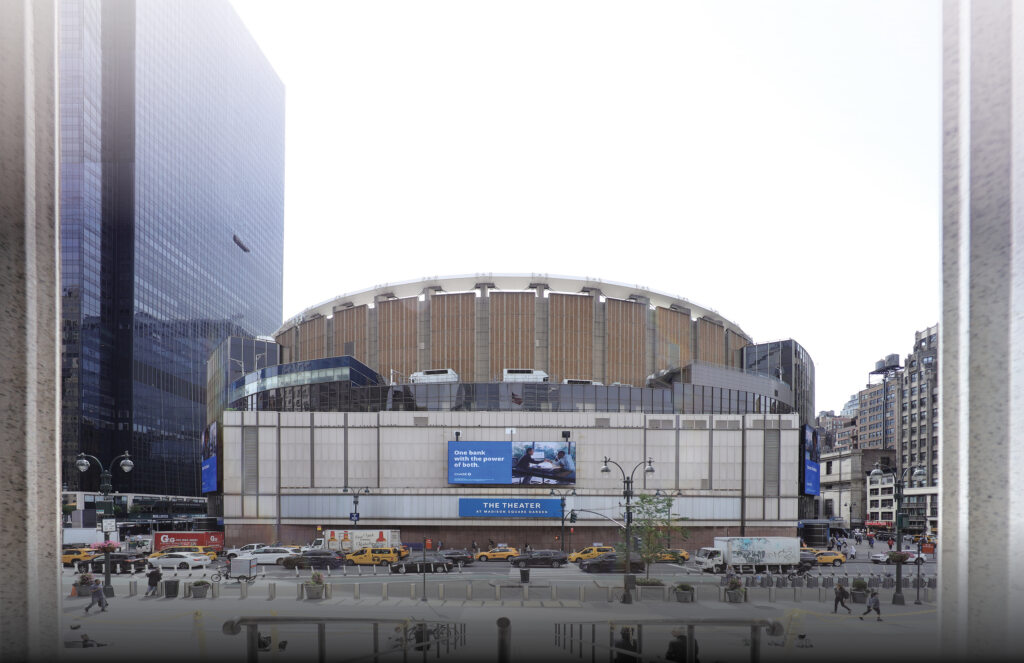
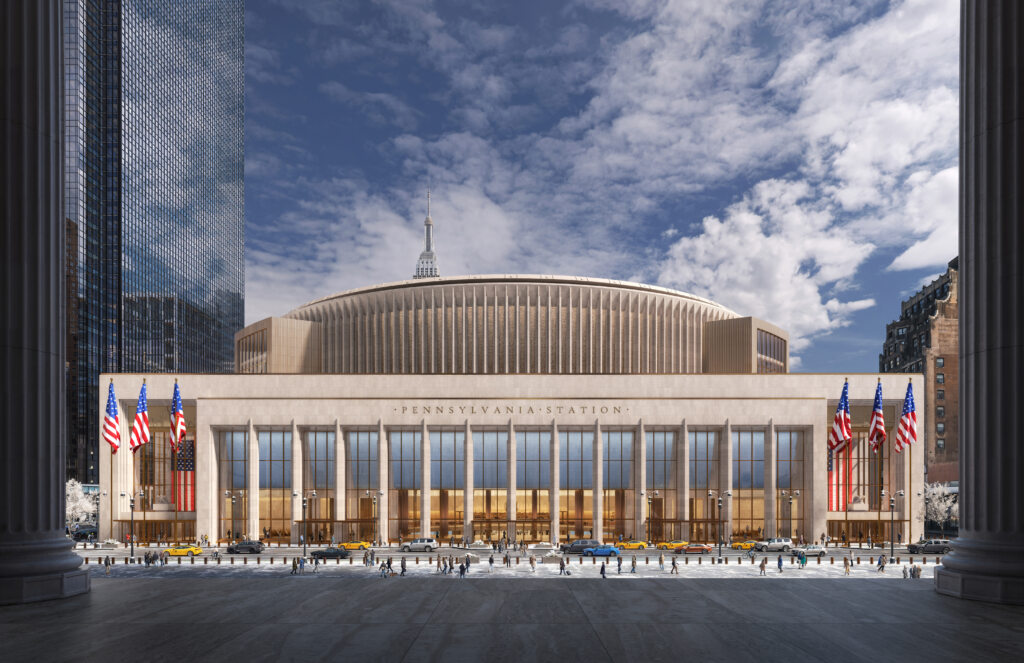
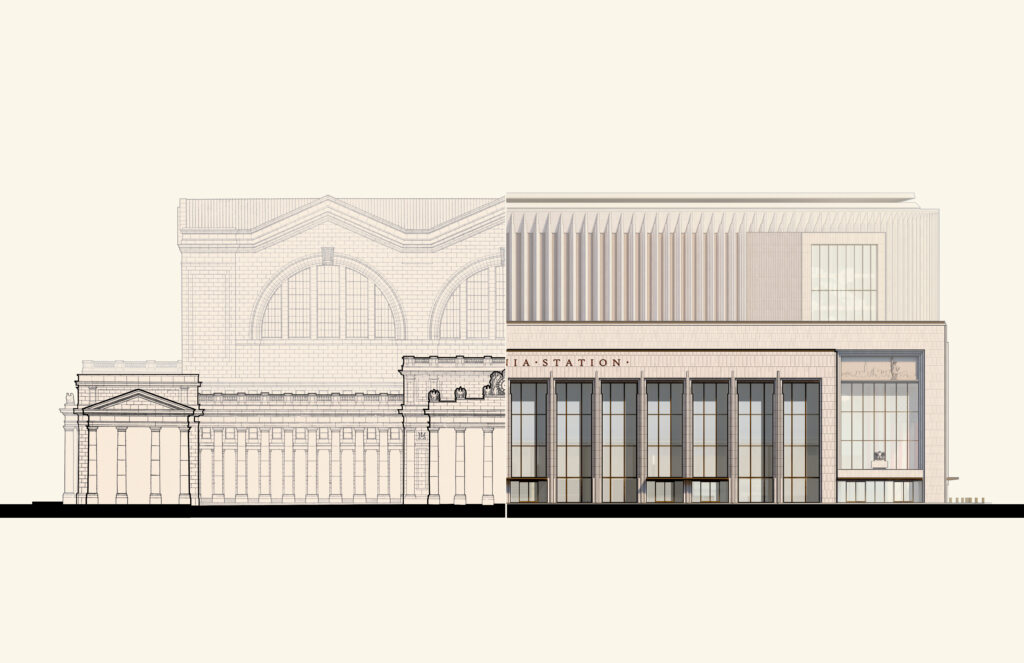
8th Ave Facade | Current (Left) & Proposed (Right)
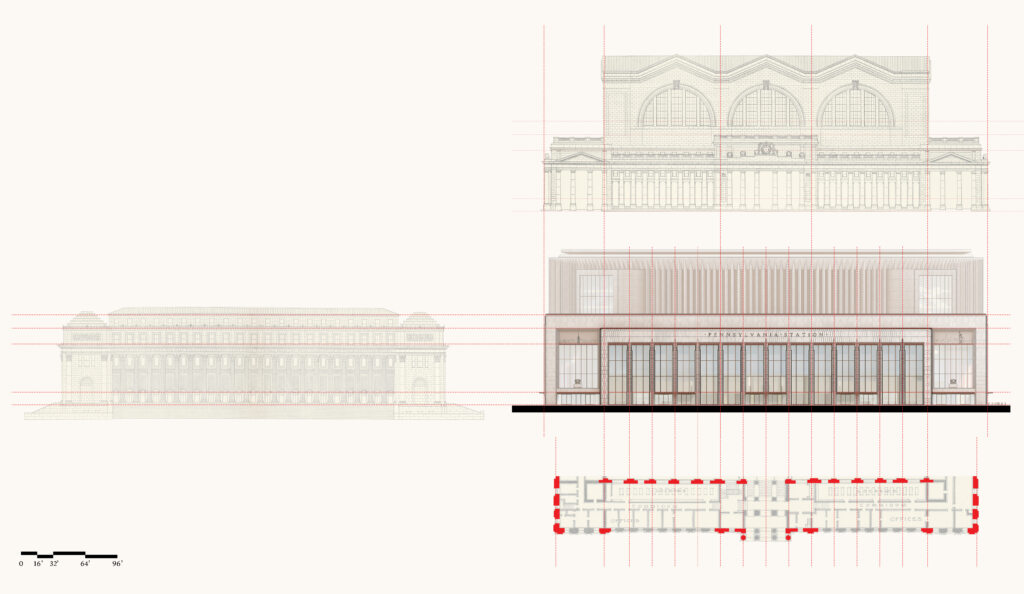
Facade Generative Diagram: Analysis of Farley Building Facade (Left), Historic Penn Station Facade (Top) and Historic Penn Foundations (Bottom)
The design judiciously reveals the charged past of this site through a palimpsest approach that amplifies layers of history. McKim, Mead & White’s original station and the Farley Building across Eighth Avenue remain central references. The new station is a “mirror of a mirror of a ghost,” reflecting both the memory of the original Penn Station and its architectural relationship to Farley.
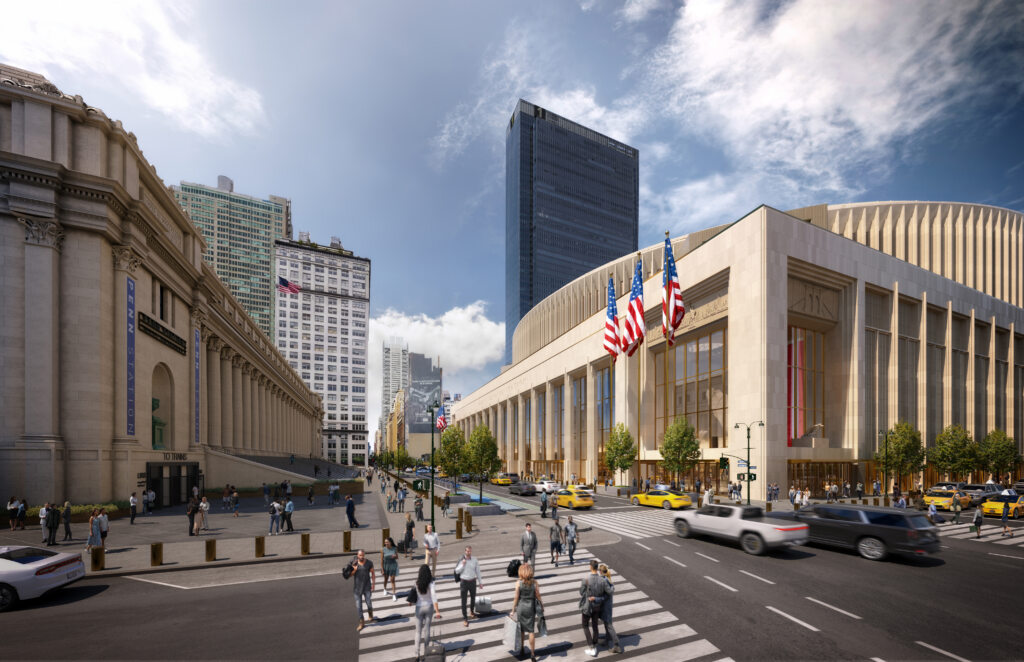
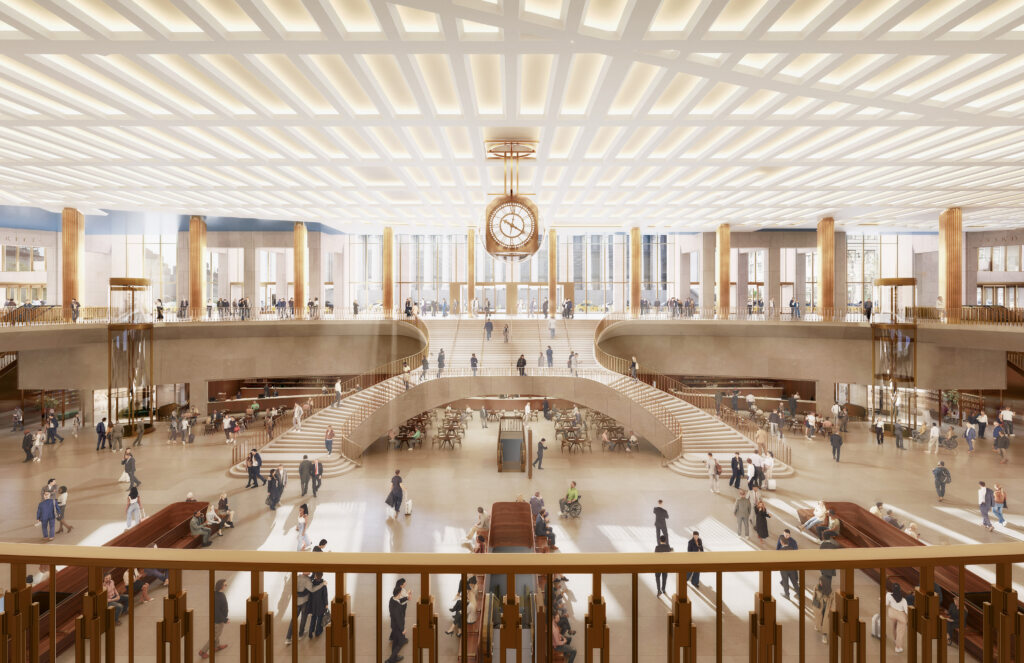
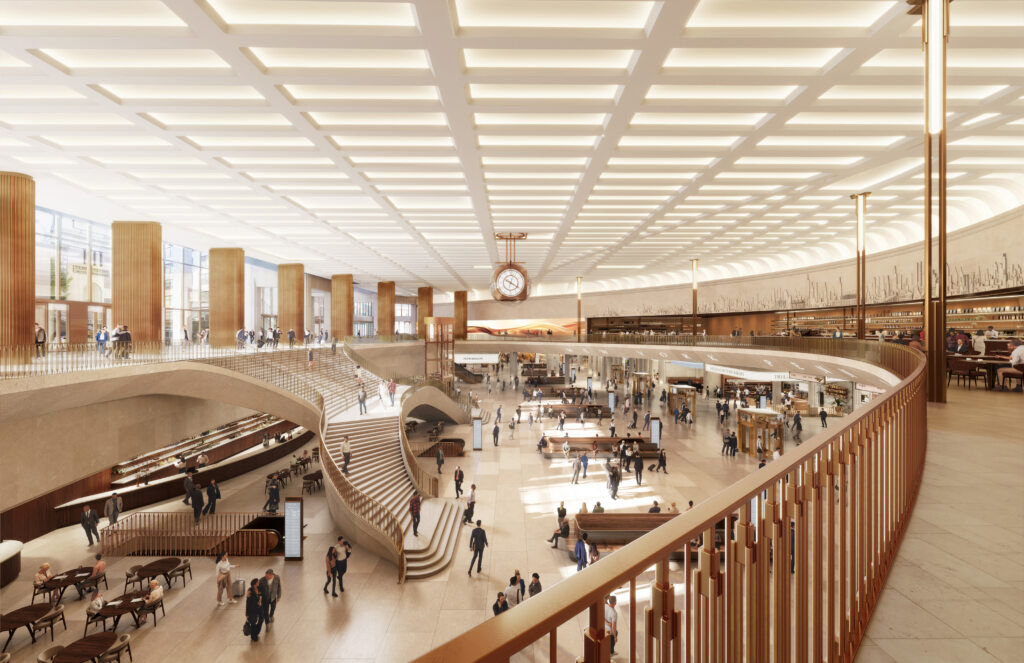
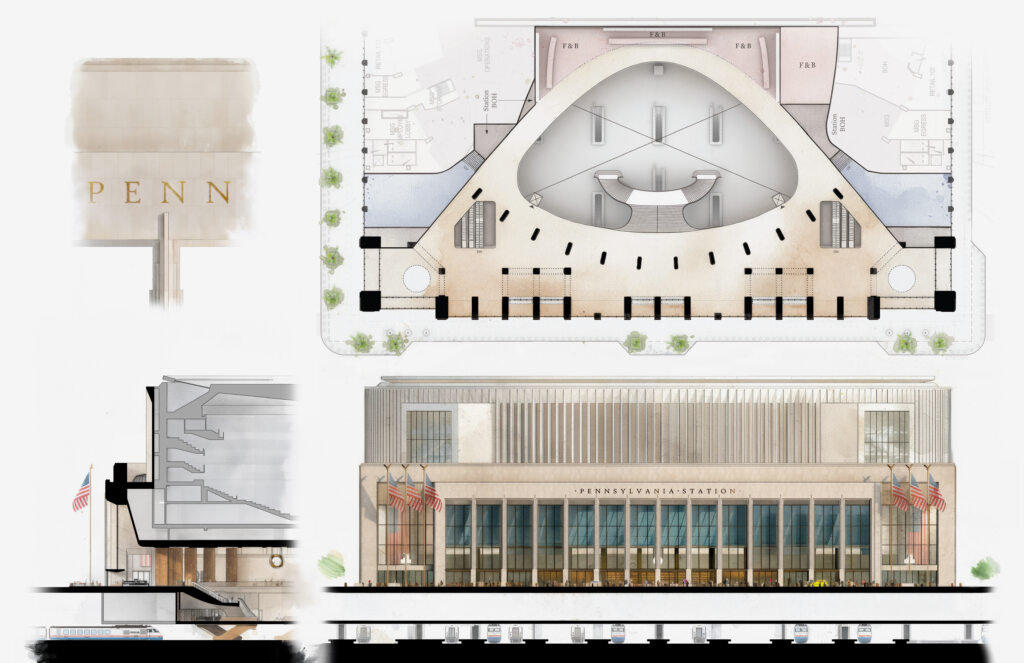
Working with PTP, HOK, and structural engineers at Severud, PAU designed a parabolic train hall that maximizes daylight, improves circulation, increases capacity, and connects the project’s vast interior expanse to its monumental public facade, resulting in a double-block colonnade that, with Moynihan, frames a 450’ civic stone room framing Eighth Avenue.
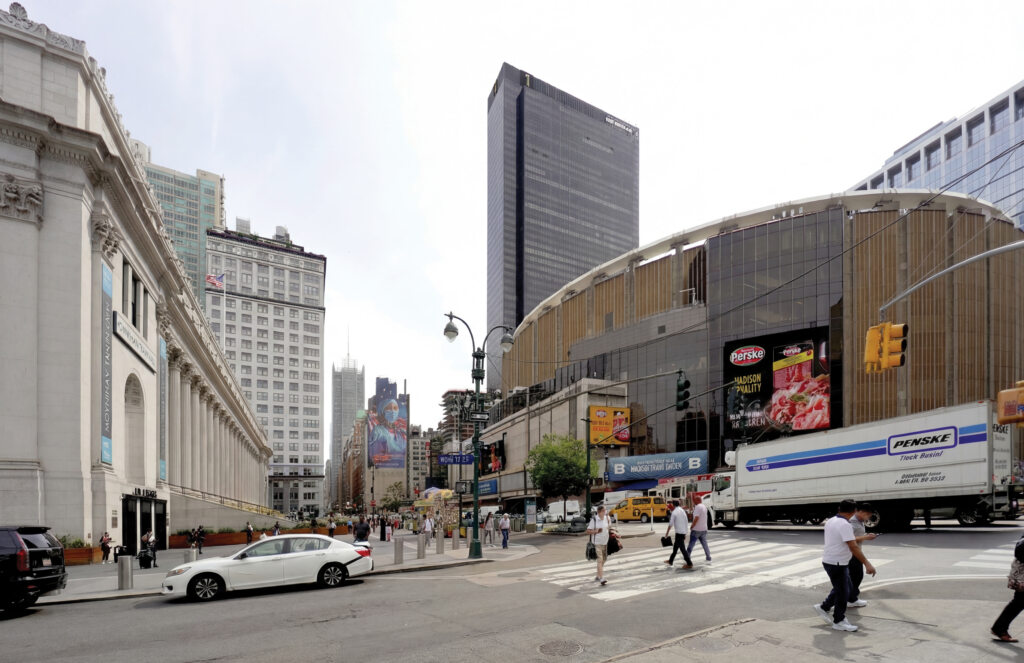
31st St & 8th Ave Corner | Current (Left) & Proposed (Right)
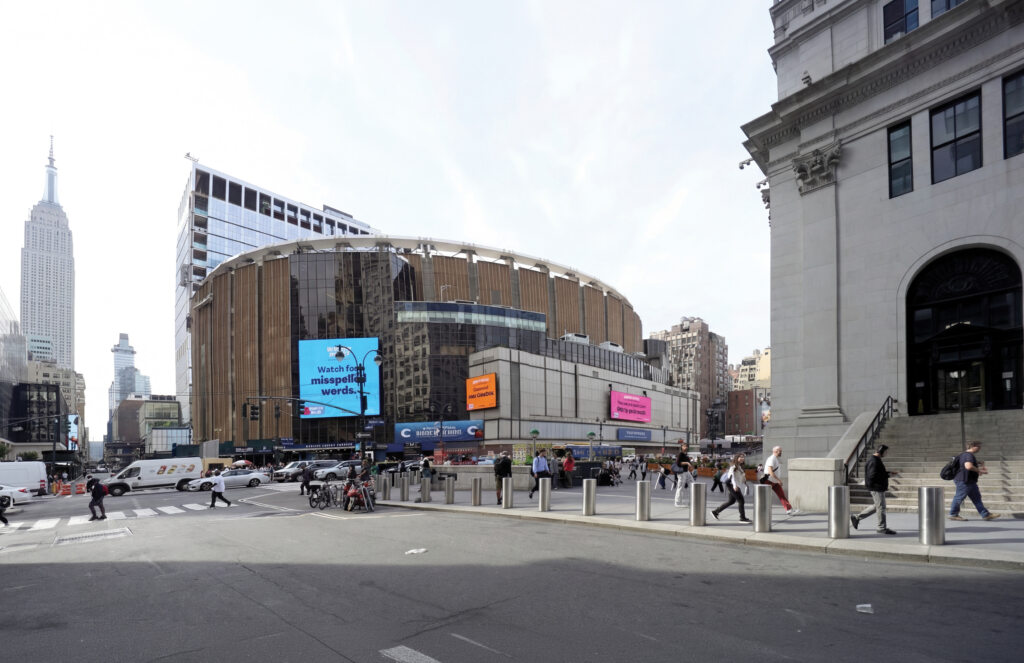
33rd St & 8th Ave Corner | Current (Left) & Proposed (Right)
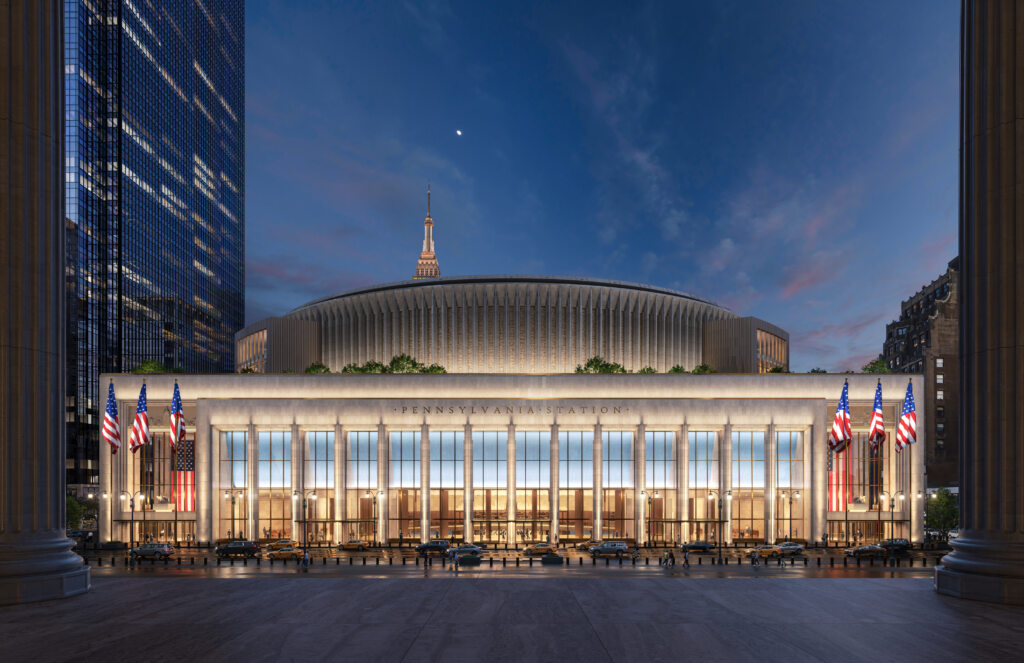
Proposed 8th Ave Facade | Night
Consistent with the philosophy of radical reuse that defines this design, structural elements tied to Madison Square Garden are integral components of the transformed building. Existing columns are incorporated into a series of stone entry porticos known as the “McKim Vestibules,” while the arena’s mast columns are clad in ribbed bronze and integrated into the train hall’s monumental interior geometry. Skylights illuminate these vestibules, which in tandem with the glazed façade along the Eighth Avenue colonnade, flood the train hall with natural light.
The resulting composition combines stone, bronze, layered entablatures, and expansive glazing to create a civic facade that is porous, luminous, and monumental. The architectural language draws heavily from New York’s Art Deco tradition and the WPA era.
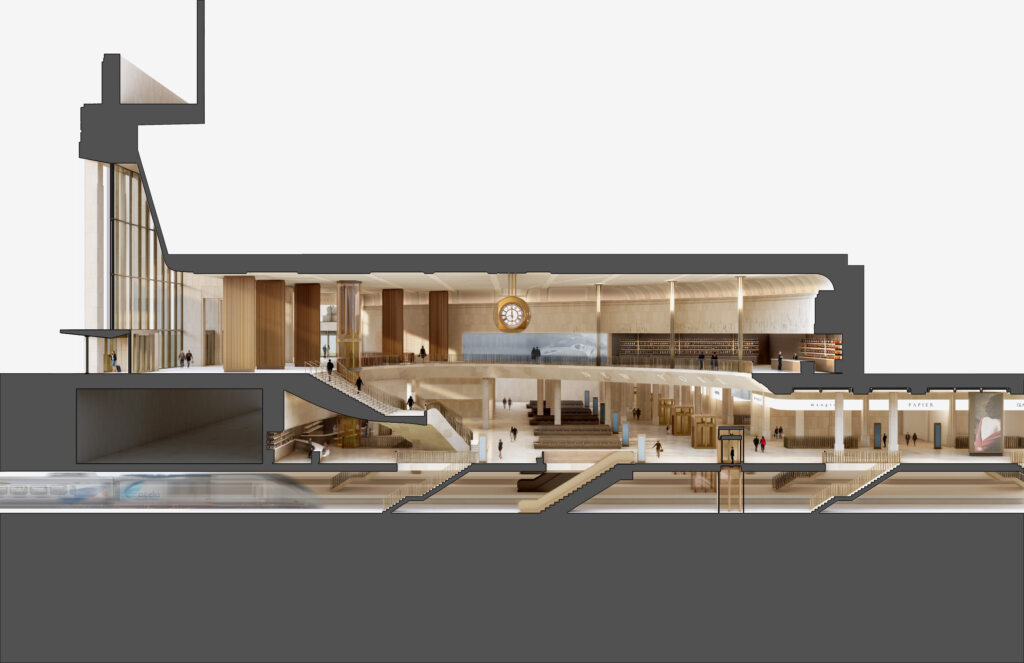
8th Ave Train Hall Section Perspective
8th Ave Train Hall Looking West
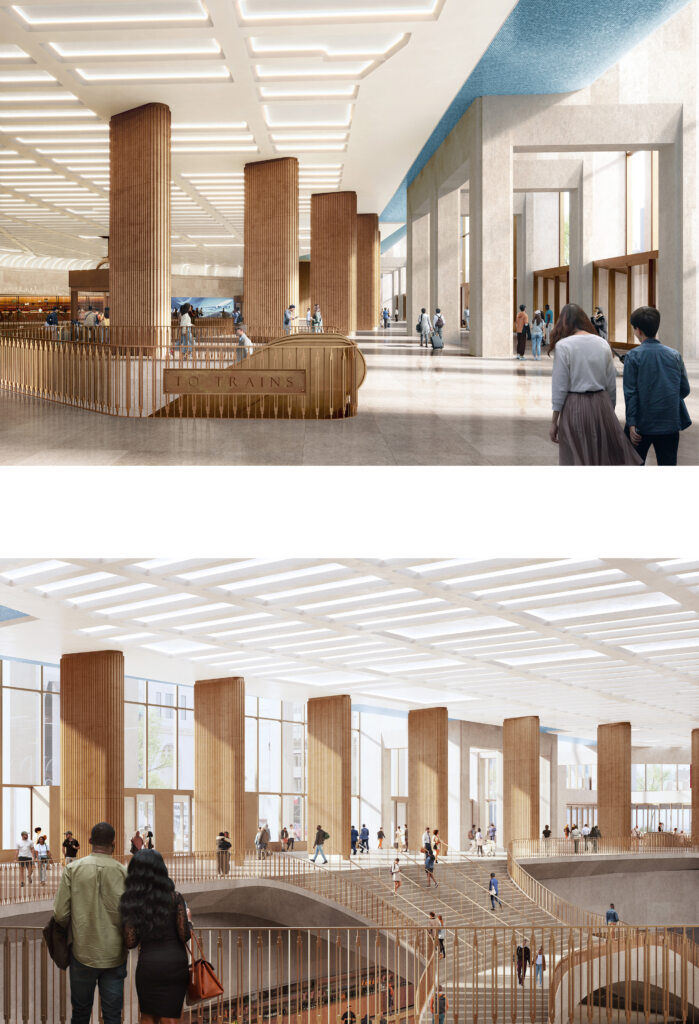
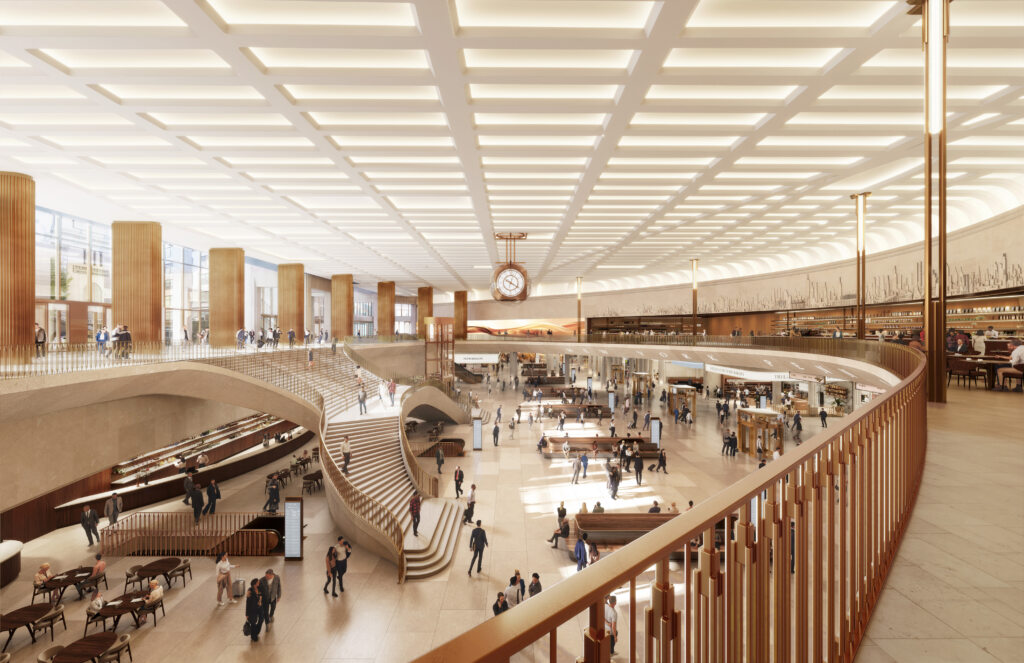
8th Ave Train Hall Looking North
Grand Stair Looking East
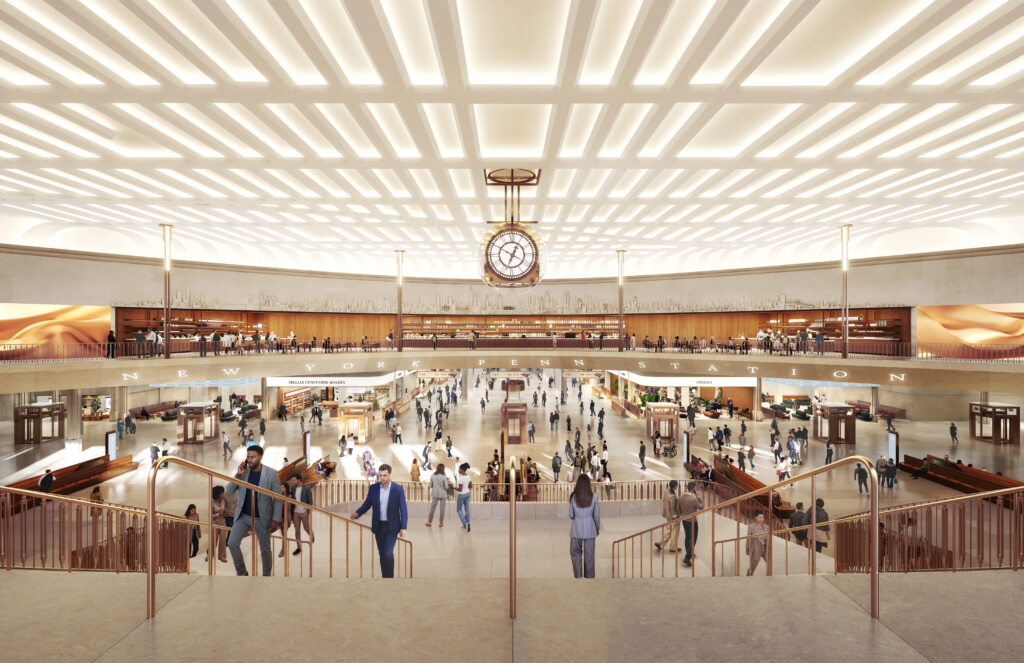
Inside, the station is organized around a soaring train hall more than 50 feet tall, which replaces today’s compressed corridors with expansive and daylit public space. Retail, restaurants, waiting areas, and circulation are integrated throughout the hall and concourse. A sculptural central stair, flanked by elevators and escalators, connects the street to a unified concourse level accessible to all passengers.
The expanded concourse—which unfolds in a single continuous sweep—includes 165% more circulation space, widened corridors, ceiling heights of least 20’ throughout, upgraded public amenities, and significantly improved vertical movement. New elevators, escalators, and stairs, combined with platform column removals, allow the station to meet contemporary fire-safety standards, while easing congestion and improving the speed at which trains can enter and leave the station.
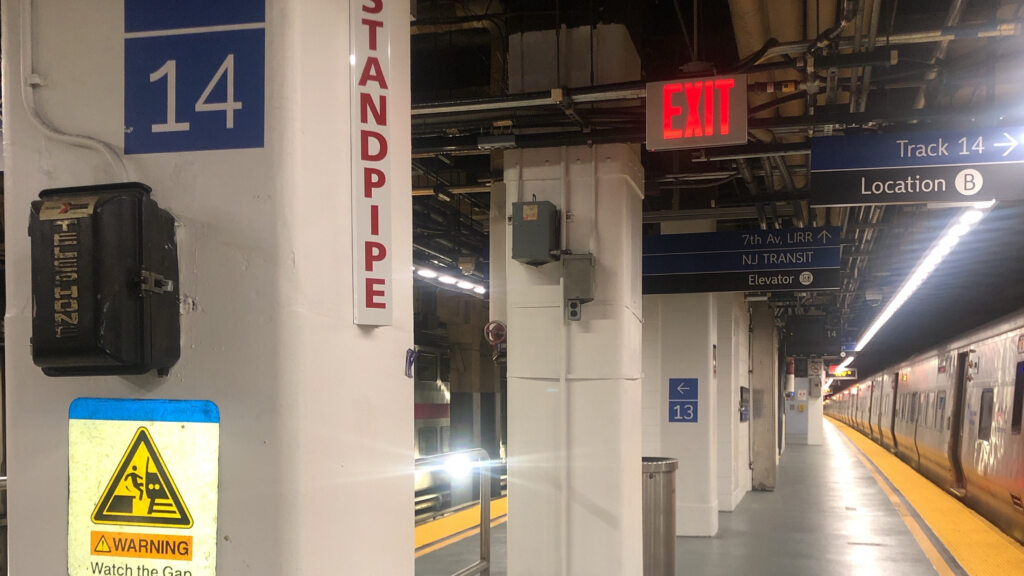
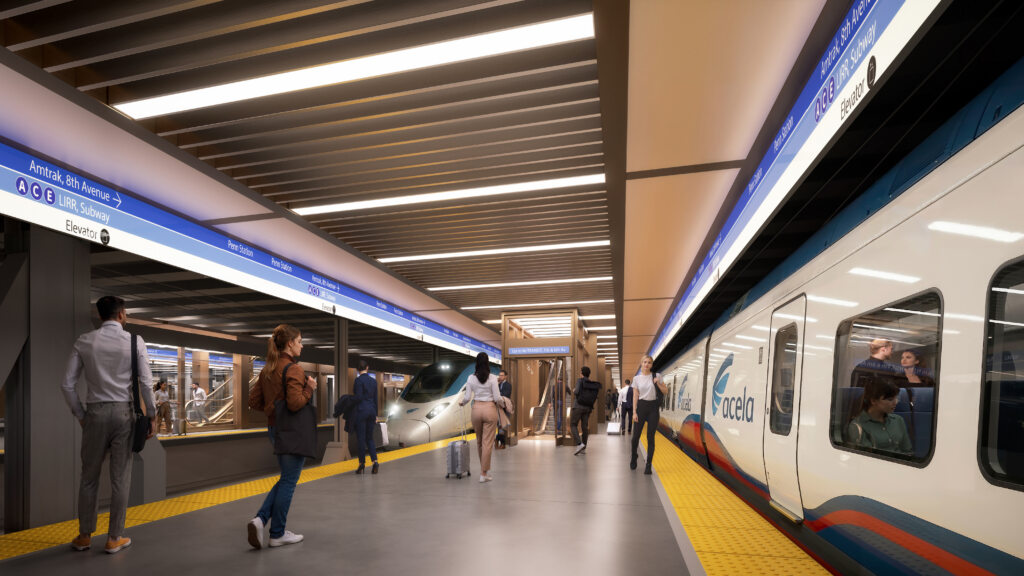
Platform 7 | Current (Left) & Proposed (Right)
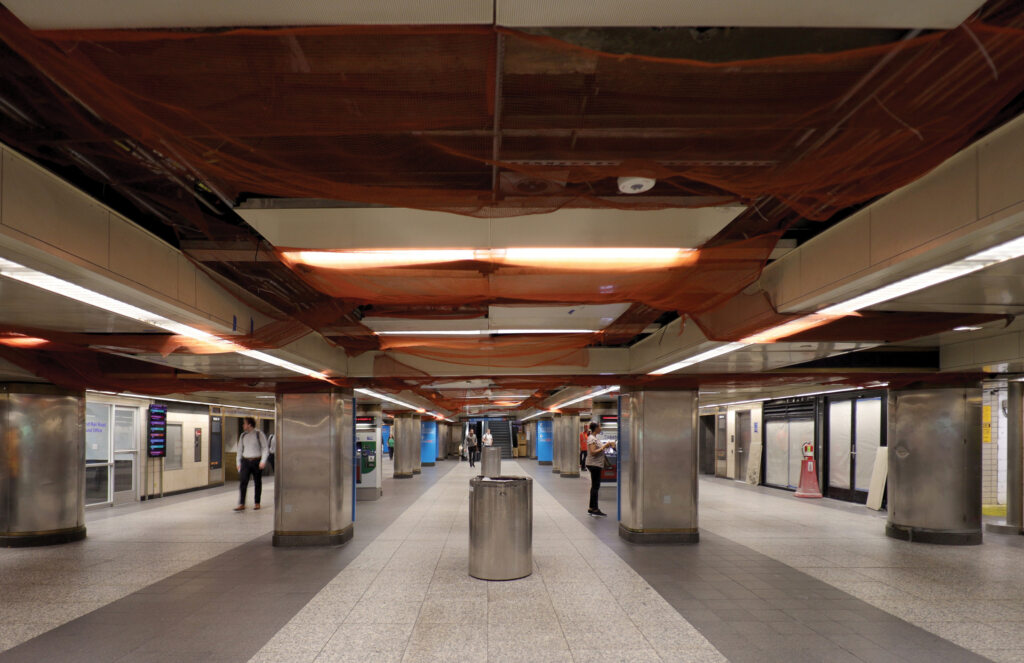
Concourse Level Looking South | Current (Left) & Proposed (Right)
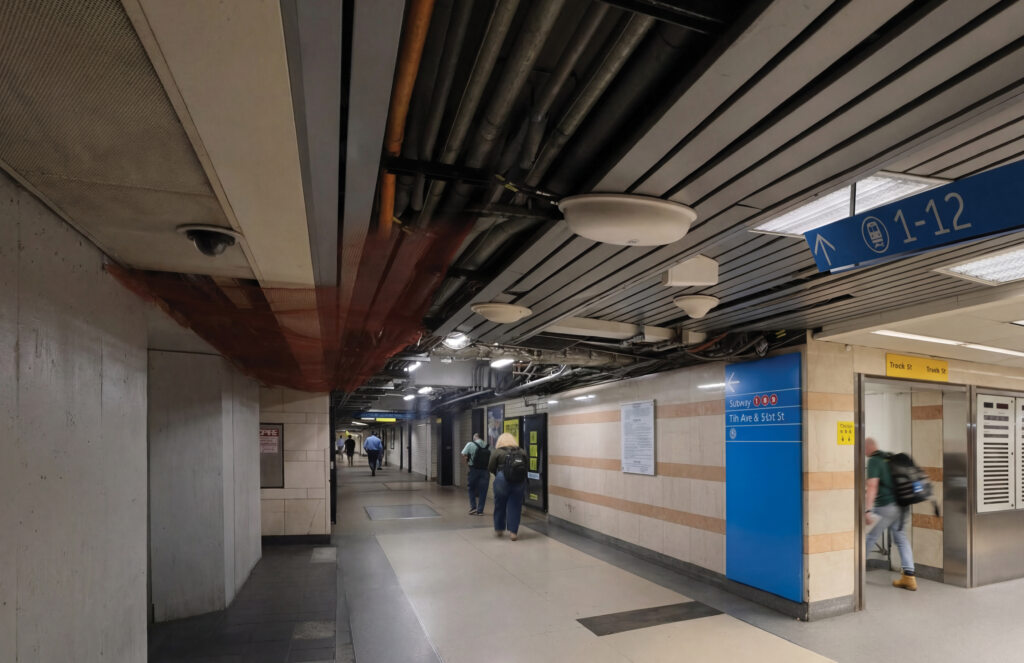
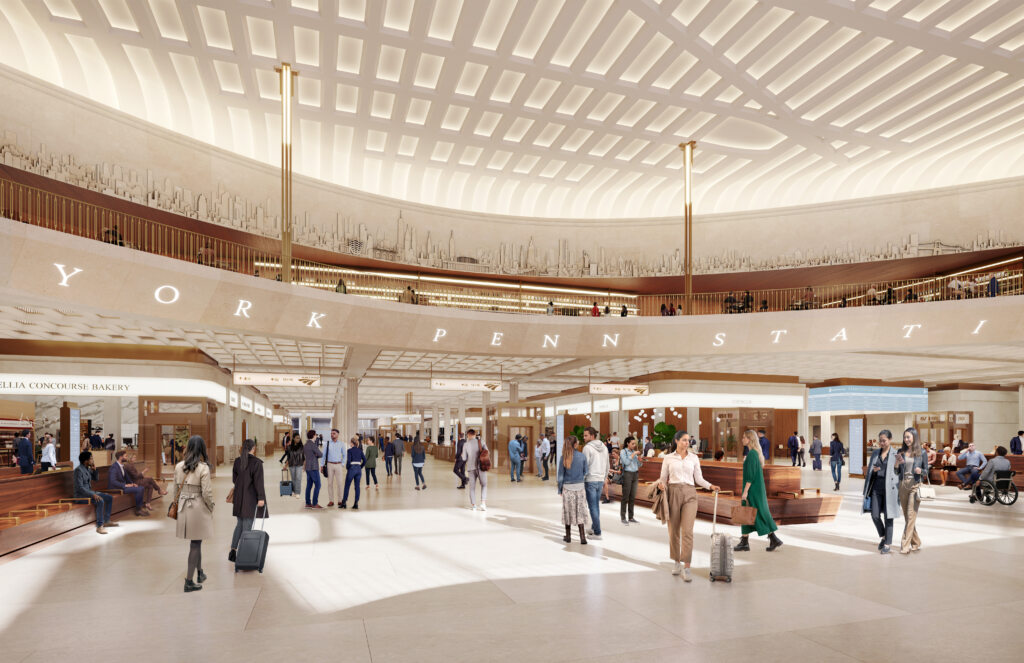
32nd St Corridor | Current (Left) & Proposed (Right)
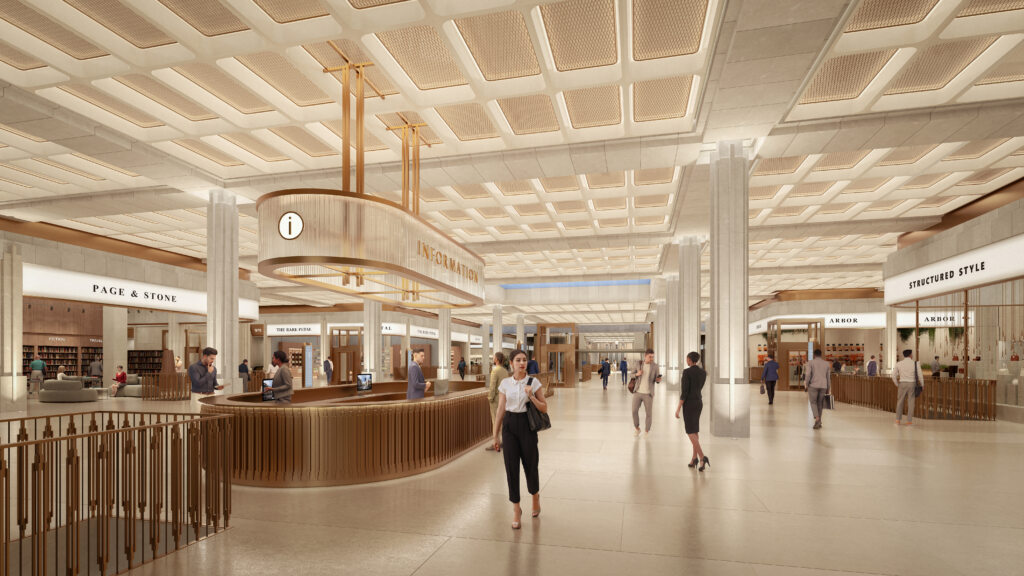
32nd St Corridor Looking East
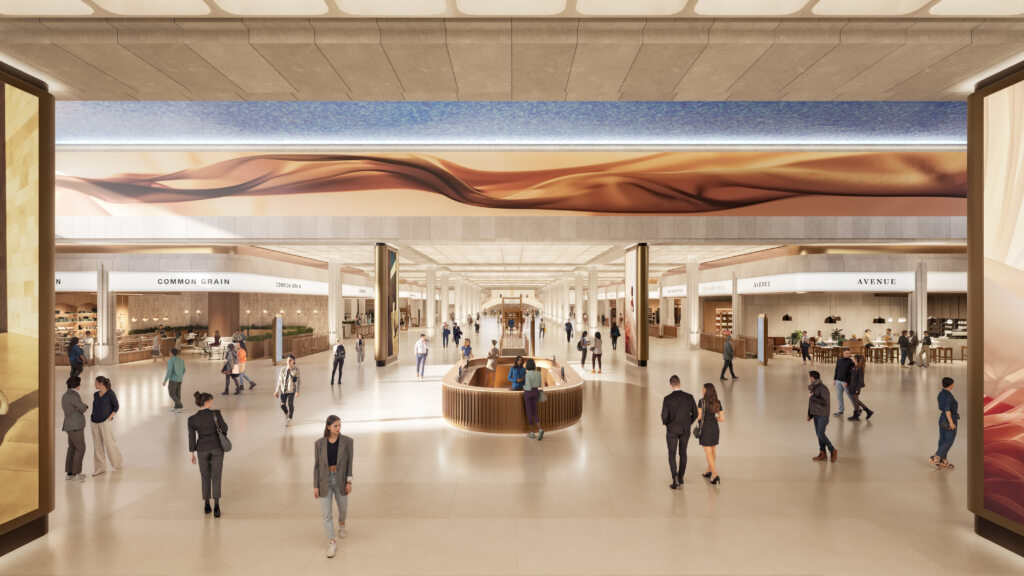
Midblock Concourse Looking West
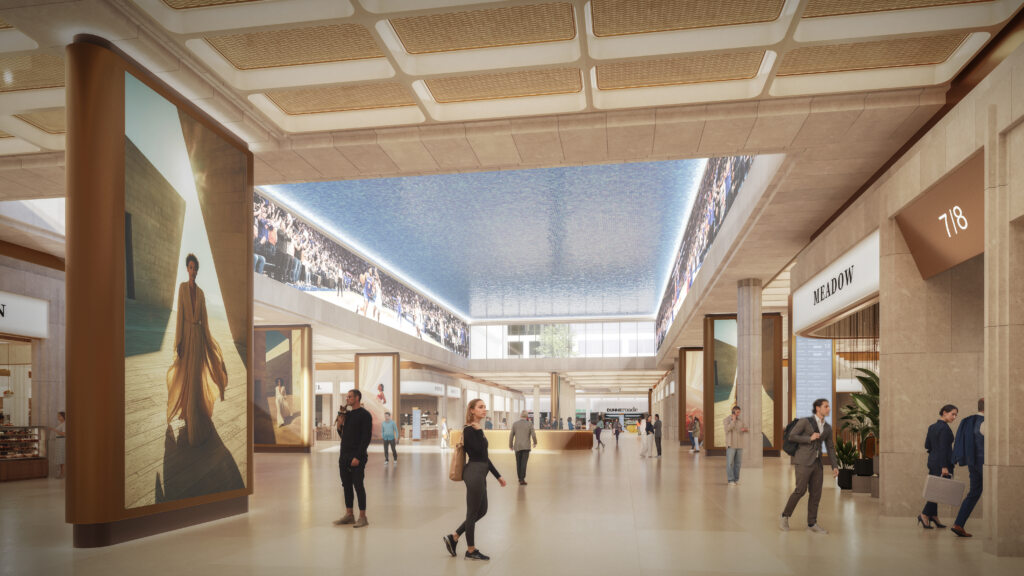
Midblock Concourse Looking North
For PAU, the project represents an “architecture of memory”—one that draws from historical precedent without replicating it. The proposal seeks to unite sustainability, durability, public utility, and civic grandeur in a station designed to serve future generations, while addressing the errors of the past. More than a transportation project, the remaking of Penn Station is an effort to restore a sense of public ambition to one of the most important civic spaces in the United States.
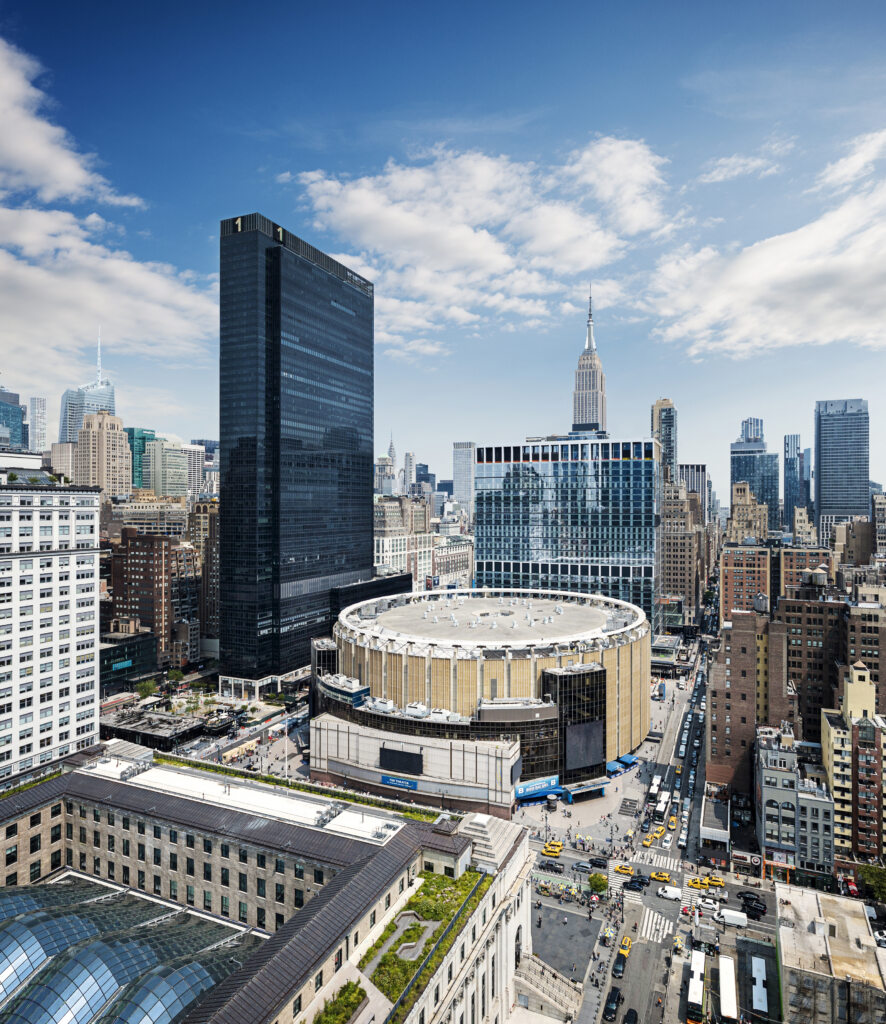
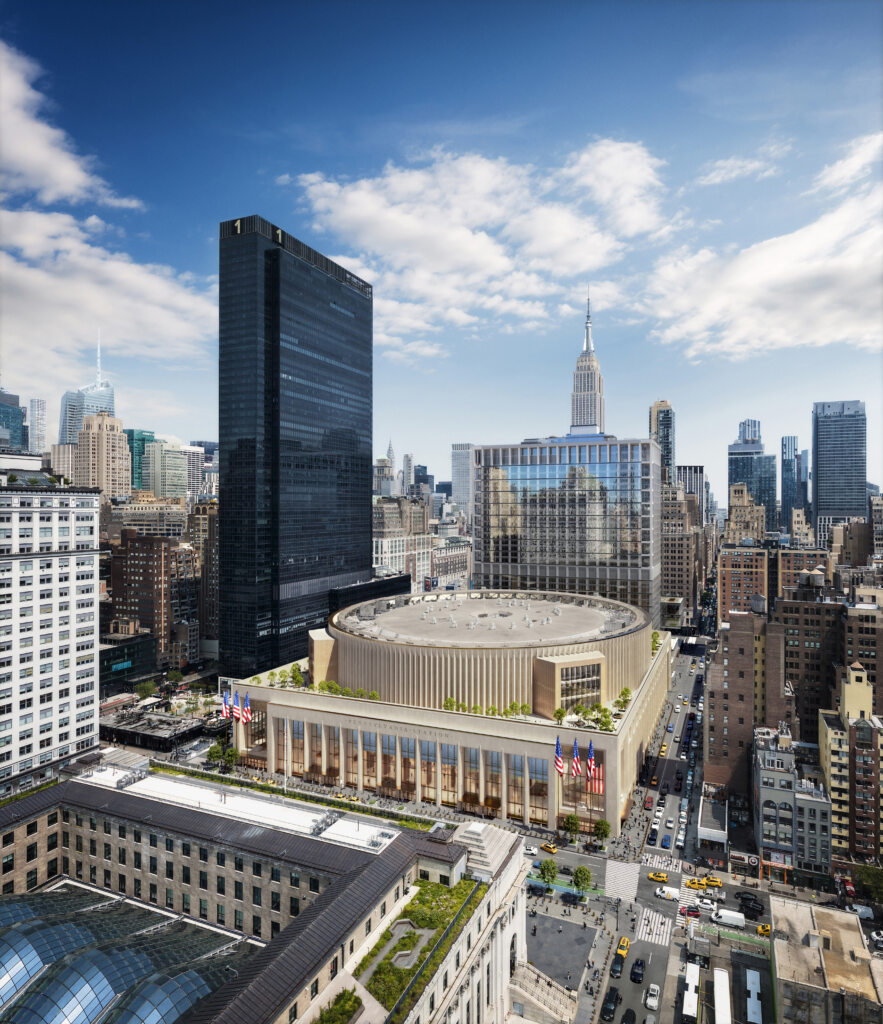
Aerial | Current (Left) & Proposed (Right)
Gesamtkunstwerk
Collaborators
Constructability, Civil Works: Halmar, Skanska
Managing Architect: HOK
Structural Engineering: Severud Associates
Mechanical Engineering: ME Engineers
Railroad Operations, Phasing: HNTB, NRC
Survey/Geotech: Langan
Wayfinding, Signage, Graphic Design: City ID, Pentagram
Back-Of-House Planning: Lerch Bates
Architectural Lighting Design: L’Observatoire
Public Art Consultant: Public Art Fund