Innovative Urban Village
Client
Christian Cultural Center
Gotham
Location
Brooklyn, NY
Year
Under Construction
Program
Mixed-Use, Residential
Size
11 acres, 2.2M GSF
East New York is a neighborhood of Brooklyn undergoing a vast amount of change. With high numbers of new construction permits being granted regularly, opportunity abounds as does worry over gentrification, displacement, and transit access. For longtime residents of the area, the Christian Cultural Center, a pillar of worship, learning, and social service, has provided a sense of stability as their neighborhood transforms around them. For the CCC’s leader, Reverend A. R. Bernard, it is important not only to give back to the neighborhood, but to make sure that any new growth is sustainable and beneficial to current residents.
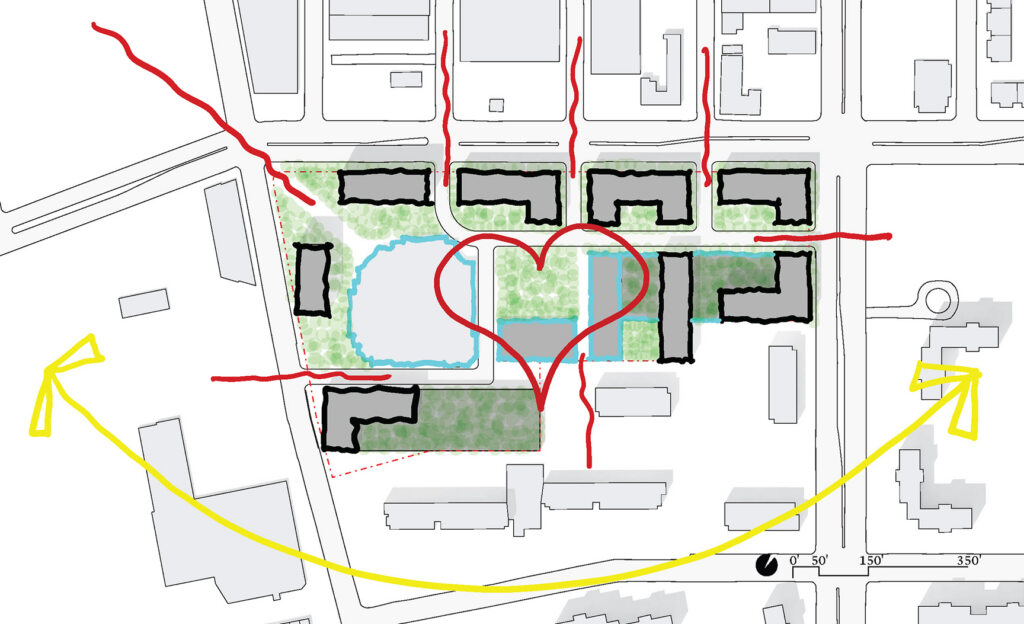
The Gotham Organization and PAU are working with Reverend Bernard to create an equitable community and cultural hub for this rapidly changing part of Brooklyn. The 11-acre site, currently occupied by the church and a surface parking lot, will be reconceived with a performing arts center, day care facility, and trade school joining the existing Christian Cultural Center to form the cultural heart of the campus. A new interior street lined with quality income-based housing for the local community will connect to extensions of the surrounding street grid to tie the development to its context. This holistic program outlines a new model neighborhood that balances density through a range of building typologies and heights with a pedestrian, communal scale of living.
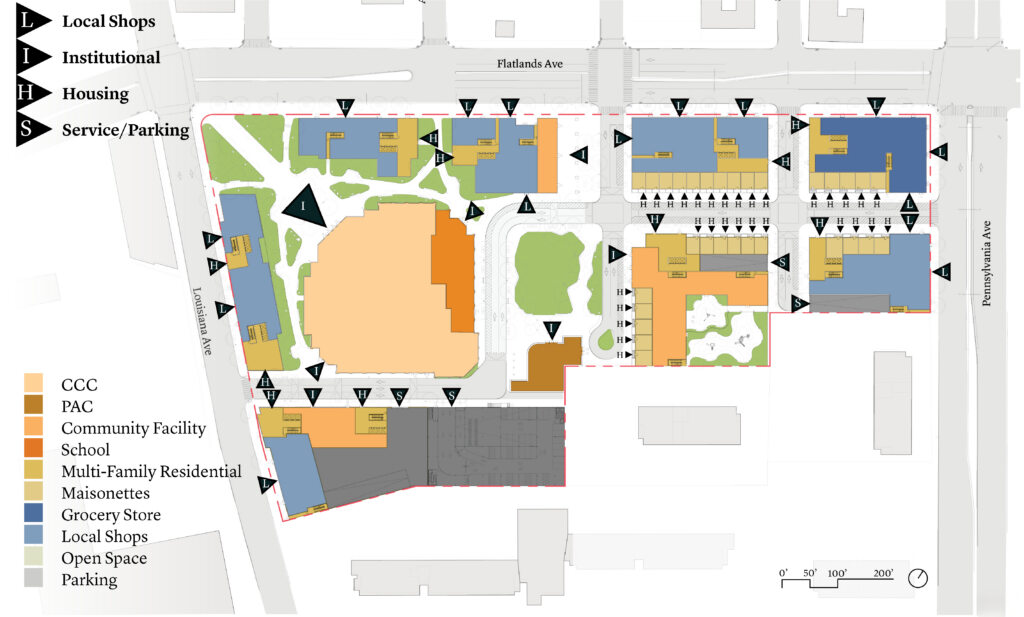
Urban diversity and street activation
The Urban Village brings a new concept of affordable housing to East New York and provides robust programming for a growing community. This milestone marks the beginning of an amazing response to the needs of our community.”Reverend A.R. Bernard,
Founder, President and Senior Pastor of Christian Cultural Center
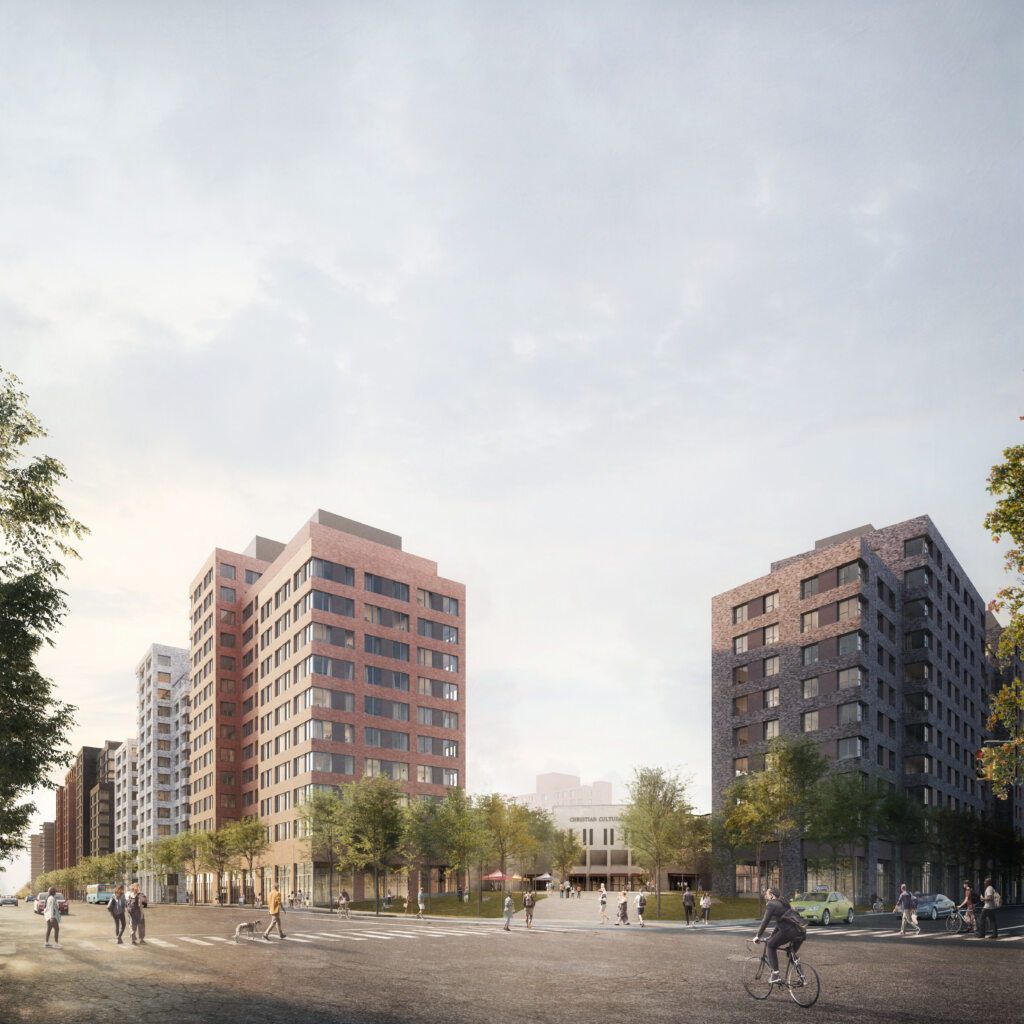
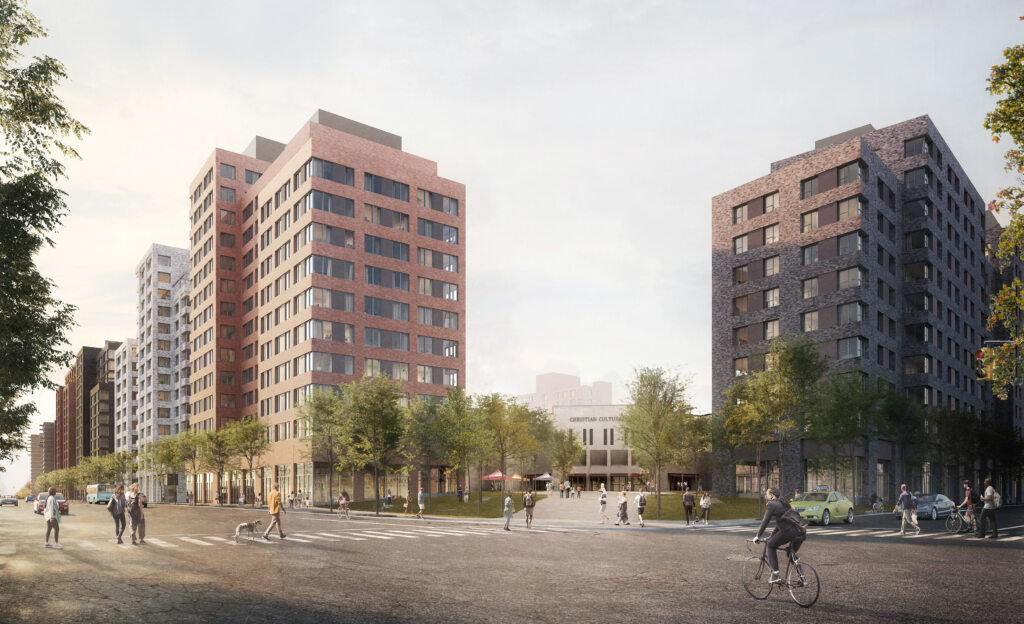
Flatlands and Louisiana venue corner looking east
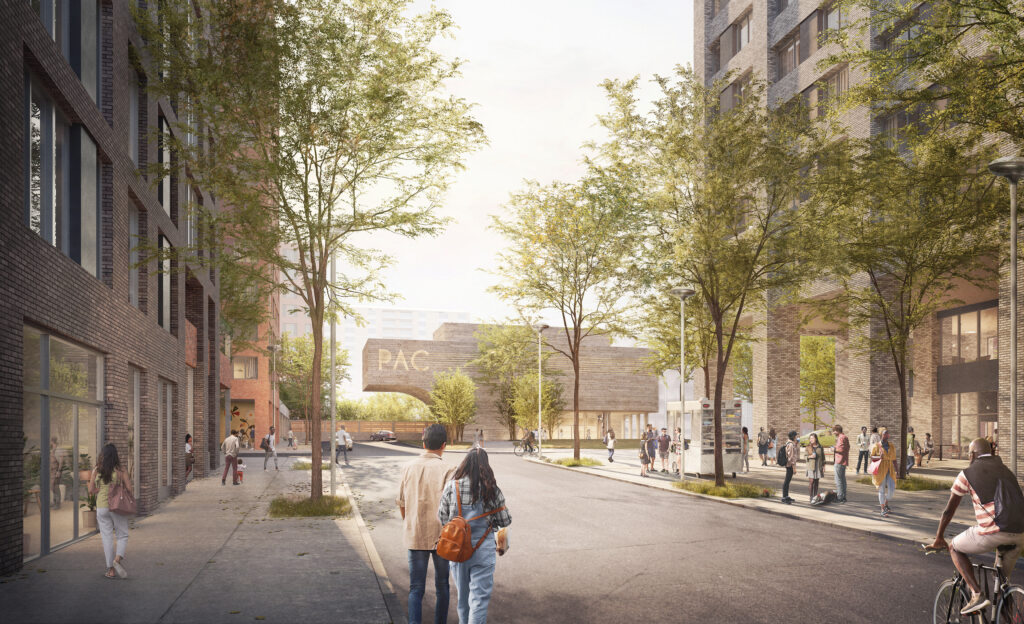
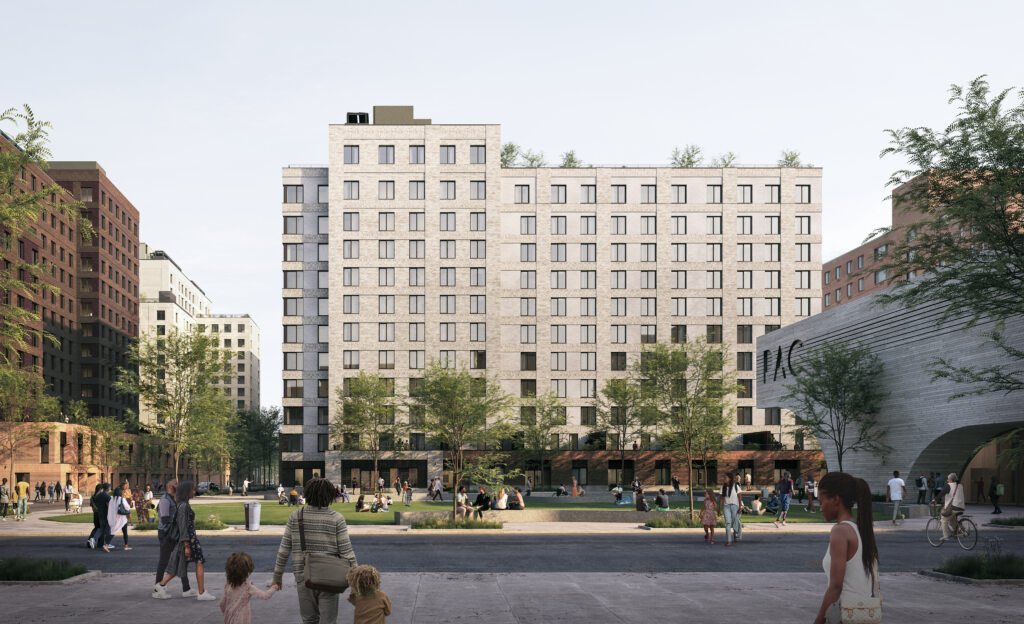
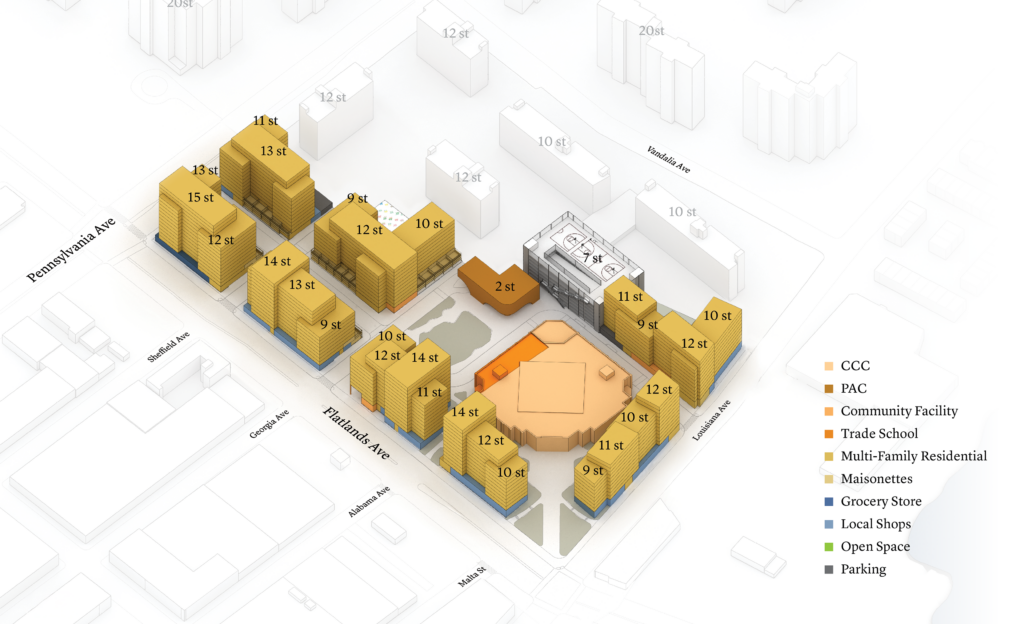
Residential towers will provide approximately 2,050 income-based apartments, with space for a host of community facilities at the ground level. The new day care will serve the neighborhood, and the performing arts center will provide a much-needed venue for existing East New York cultural organizations, offering a variety of programming. Along the interior street, two-story maisonettes with front stoops will back up against the residential towers; the avenue sides of the towers will be lined with ground-level space for a variety of retailers, including a fresh food grocery store and small shops to meet community needs. A wide piazza at the corner of Flatlands and Louisiana Avenues welcomes the public into the campus. Seamlessly connected by walking paths and green spaces, these services and spaces combine to create a collaborative, accessible, “urban village” lifestyle for longtime as well as new members of the neighborhood.
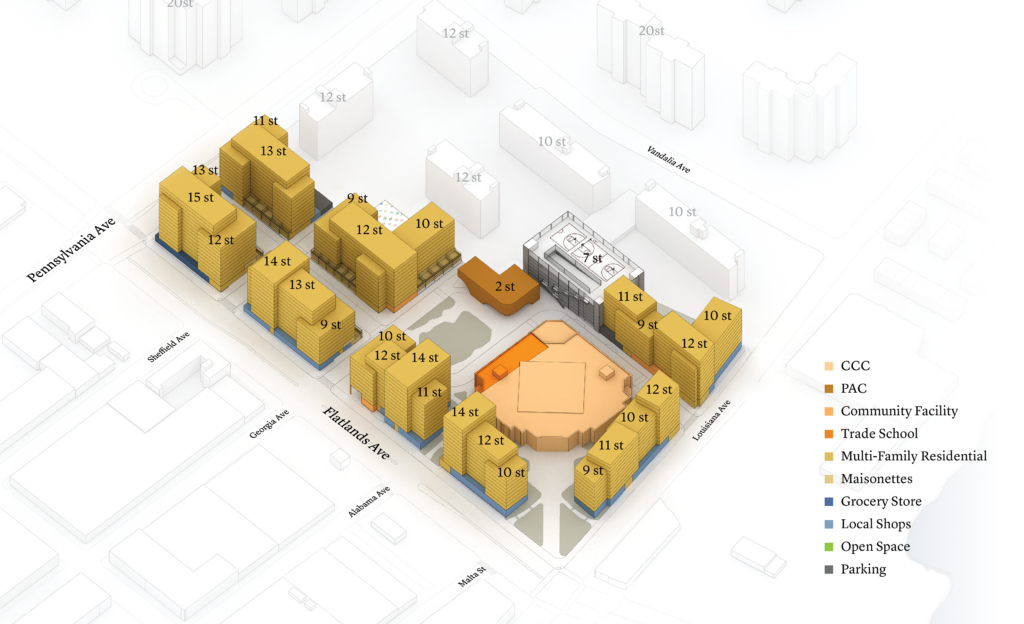
Site axonometric
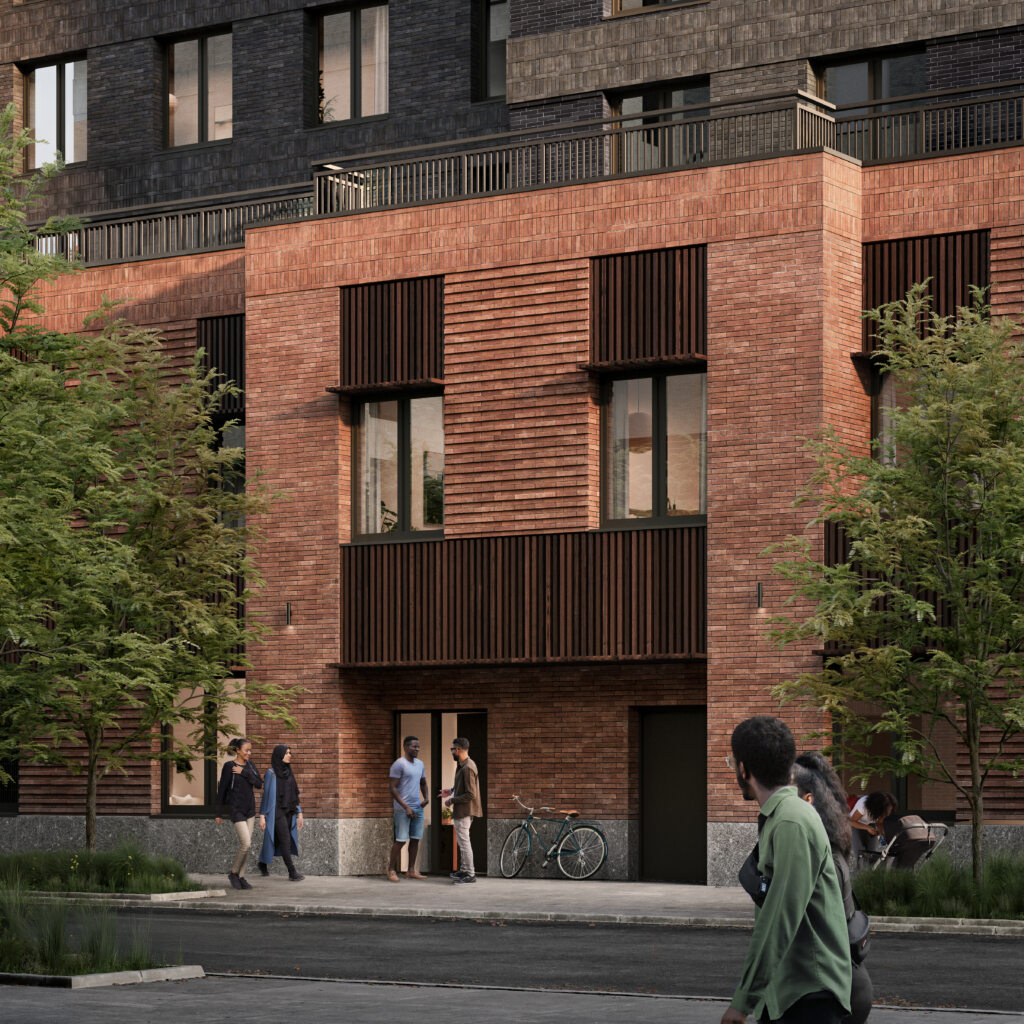
Maisonette at inspiration lane
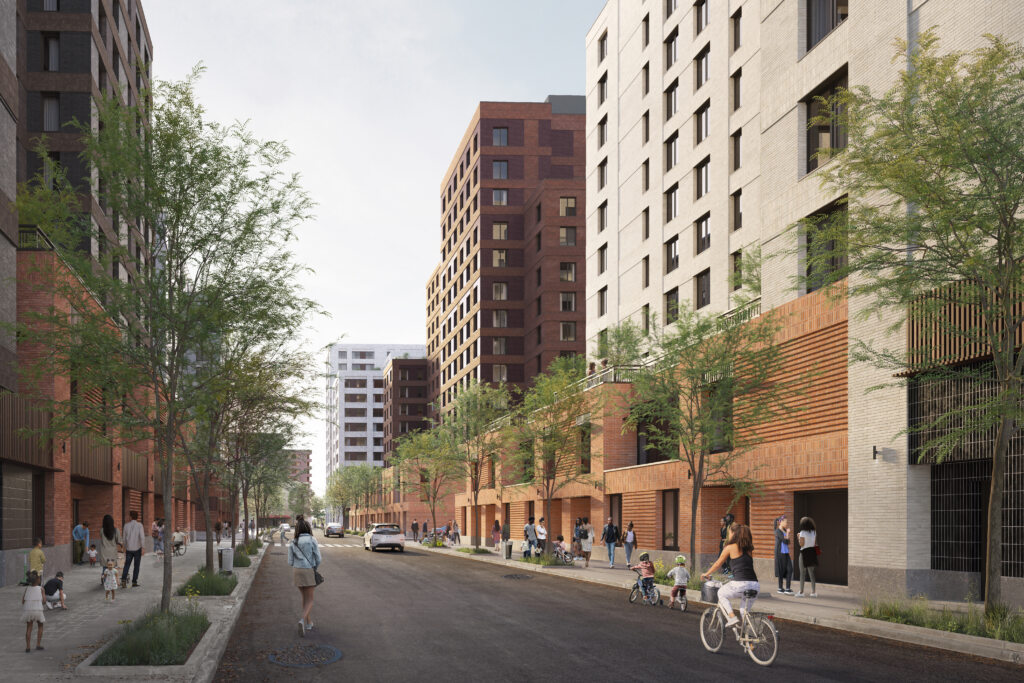
Inspiration lane looking west
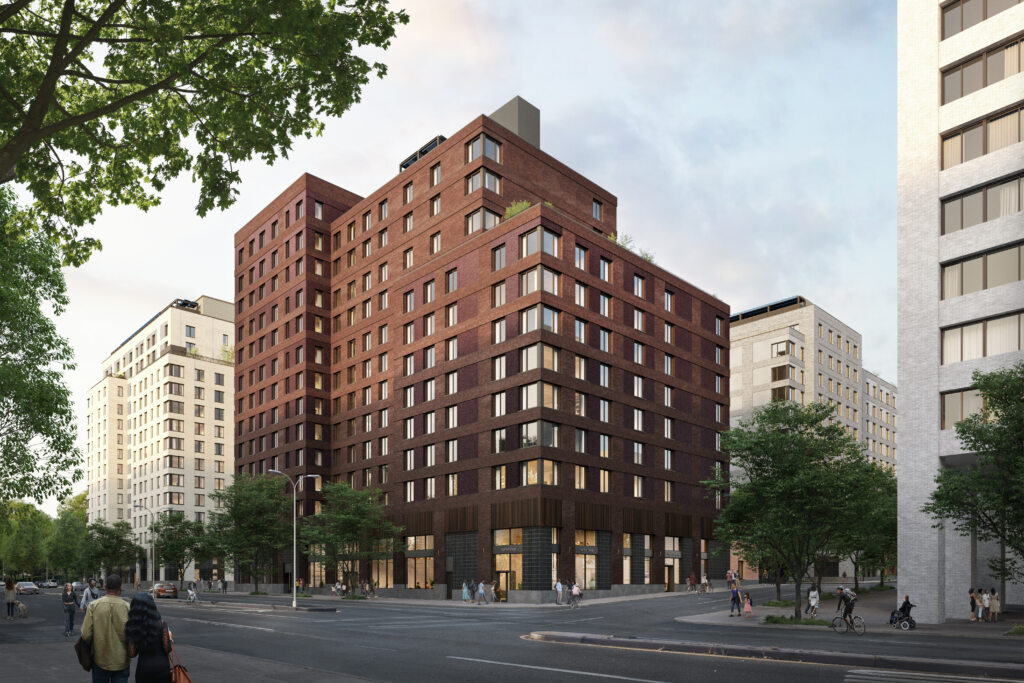
Campus quad looking east
Following a strong endorsement from the local community board (one vote shy of unanimous) and pronounced statement of support from Borough President Antonio Reynoso—the rezoning for the project was approved by a unanimous vote of the New York City Council and signed into law by Mayor Eric Adams in December 2022, making it among the largest fully affordable private developments approved in the city’s history— a scale of affordable development not seen since the Mitchel-Lama program of the 1970.
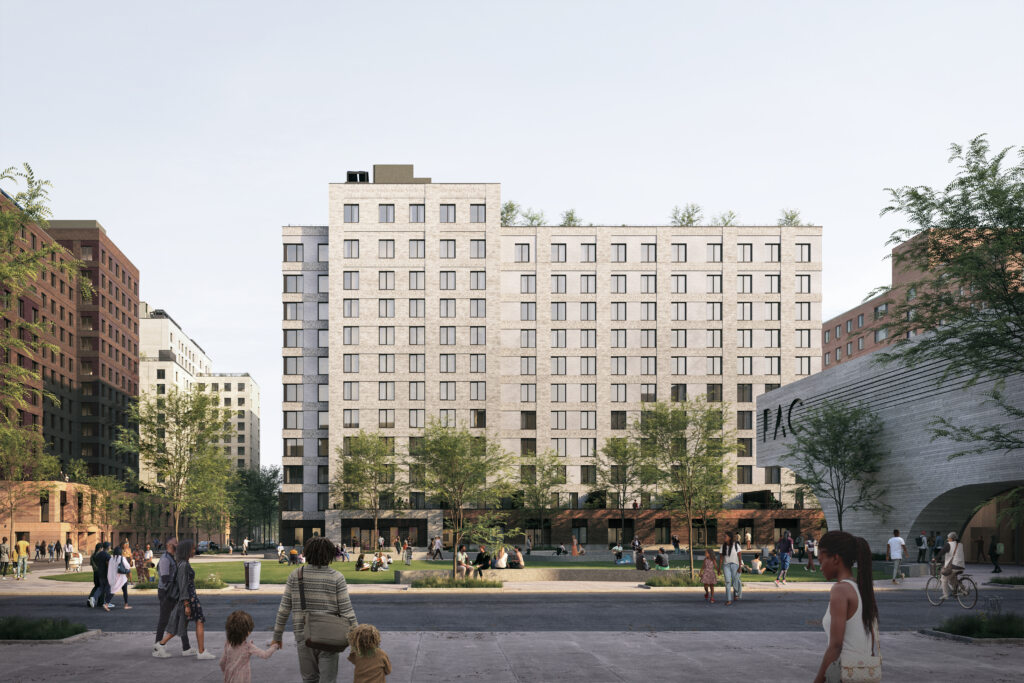
Campus quad looking northeast
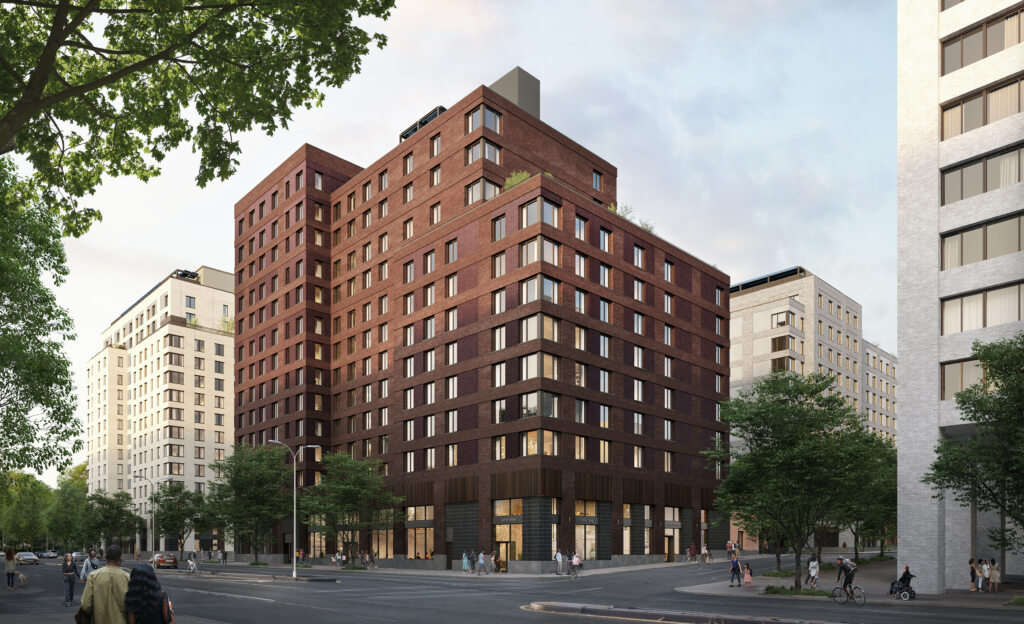
PAU is currently designing Phase 2 of the plan while the first four buildings of Phase 1 are already under construction. The design of the façade is being calibrated to a series of constraints including; a limited latitude for window sizes and distance between widows driven by the structural logic of the block and plank system; the intricacies of HPD’s strict requirements for light and air and room sizes; and client-driven non-standard floor layouts needed to meet unit counts. The façade design was derived from these constraints to create a systematized, rational grid that mitigated cost through economies of scale while still enabling a diversity of expression between buildings. This creative approach maximized the impact of limited opportunity for shadow lines and reveals, creating dynamic play of light in the tradition of hand-laid brick buildings rather than the flatness so endemic to affordable housing.
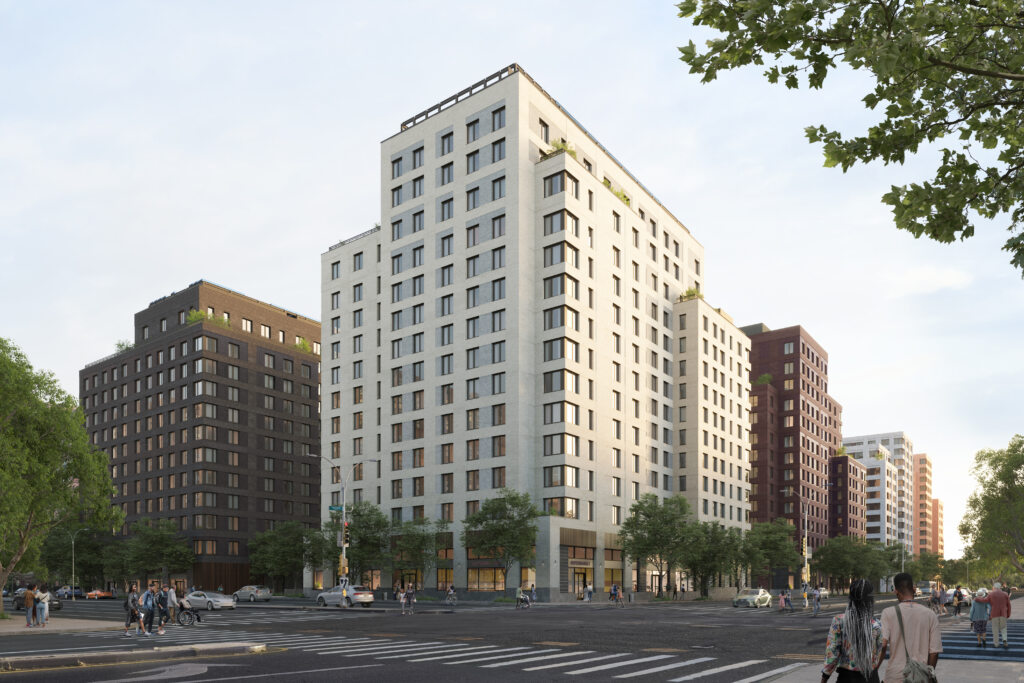
Pennsylvania and Flatlands Avenue corner looking southwest
Collaborators
AOR: SLCE Architects
Parking, Transportation and Environmental Impact Analysis: Vanasse Hangen Brustlin, Inc.
Landscape Architecture: MPFP
Structural: DeSimone Consulting
Civil Engineering: Bohler
Environmental and Geotechnical Engineering: Langan
Land Use Council: Fried Frank