Better Sheds Ahead
Client
New York City Department of Buildings
Location
New York, NY
Year
2026
Program
Pedestrian Protection
Size
New York City-Wide
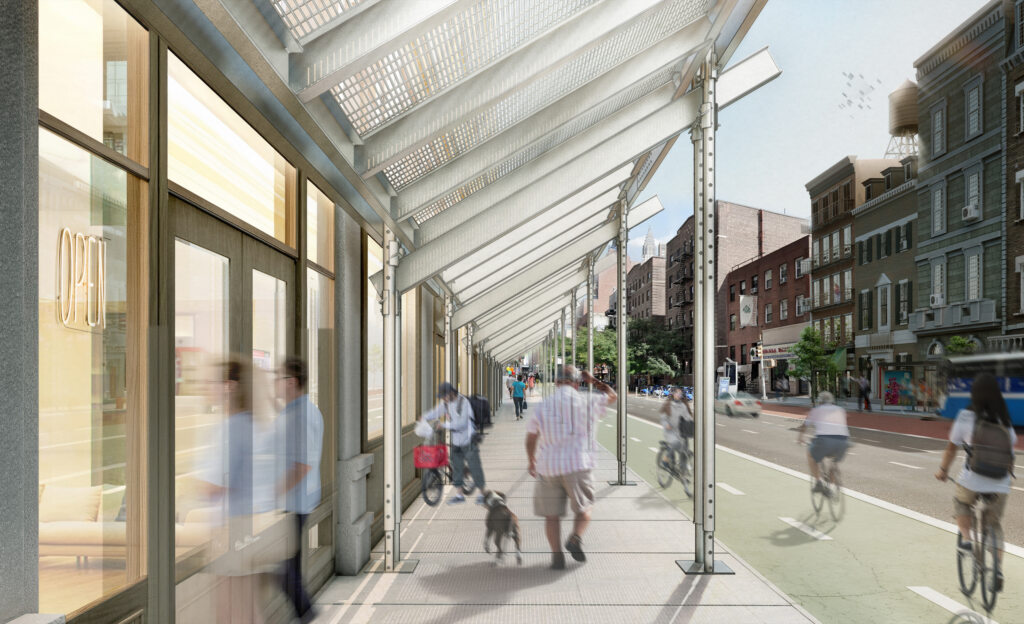
Sidewalk sheds, also known as scaffolding, protect pedestrians from falling debris during construction and demolition. They are a ubiquitous feature of city life: at any given time, New York City has more than two million feet – nearly 400 miles – of sidewalk sheds concentrated in the densest and most congested areas of our city. Most existing sidewalk sheds adhere to a uniform, 1980s-era design consisting of a flat deck, a plywood parapet, steel columns, cross-bracing, railings, and electrical lighting. While inexpensive and code-compliant, these structures are widely seen as a nuisance to city residents.
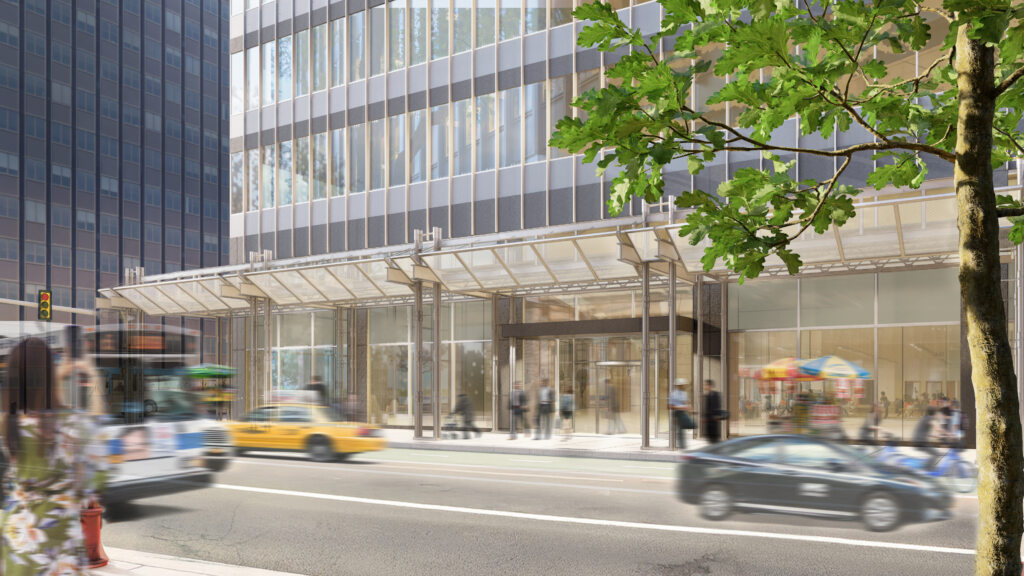
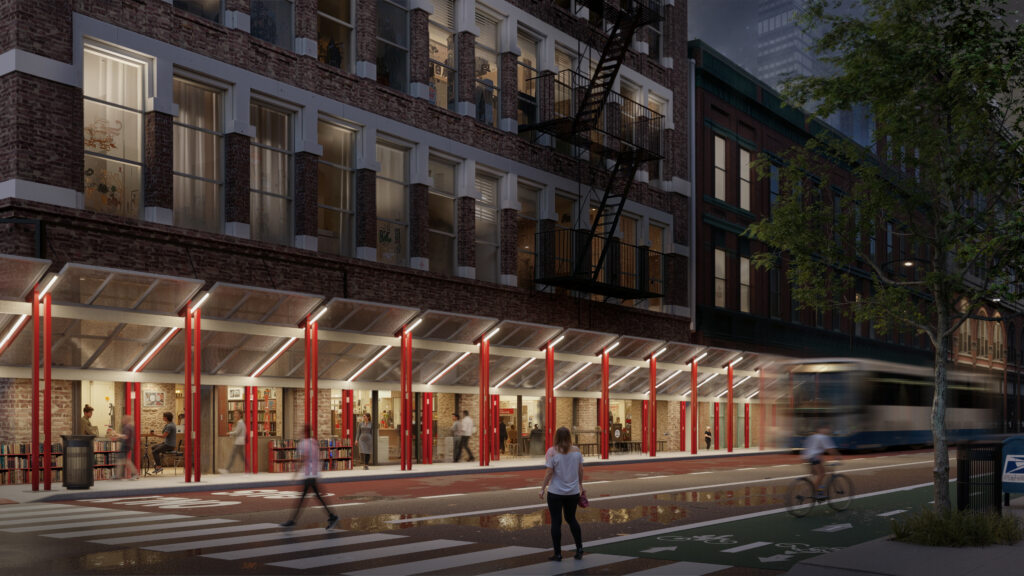
DOB has selected six new shed designs for implementation, three from PAU and three from the esteemed engineers at ARUP. Working with LERA Consulting Structural Engineers PAU developed proposals to improve circulation, adaptability, and aesthetics while minimizing installation and maintenance disruption.
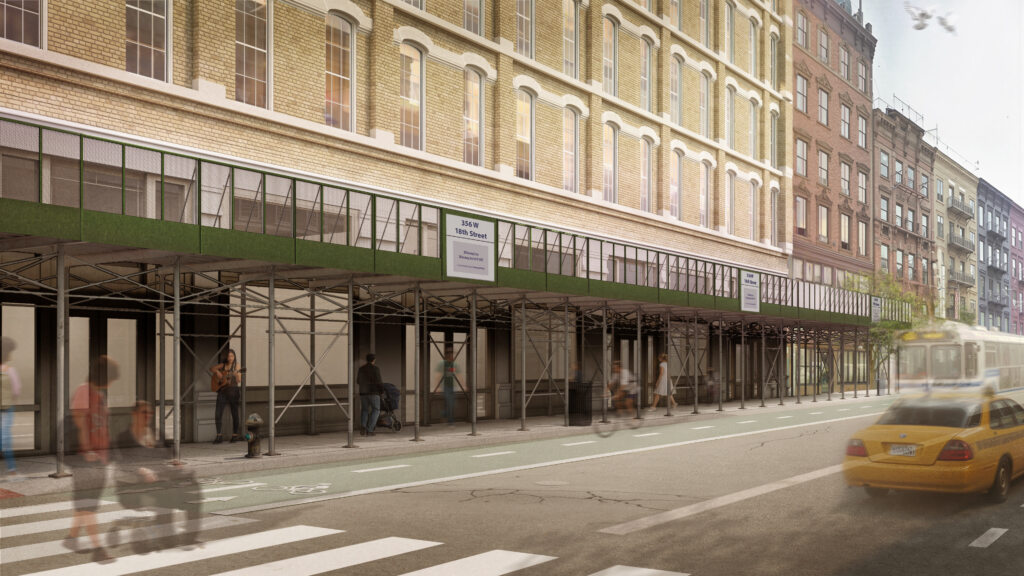
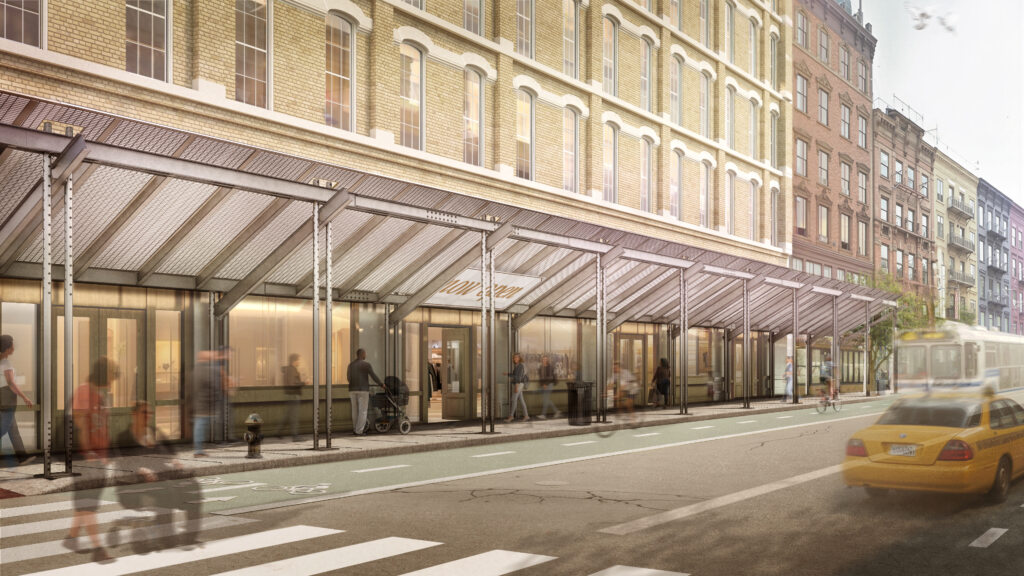
Baseline shed
These new shed designs are leaps and bounds above what we see on sidewalks today and coupled with scientific evidence-based reforms of the city’s façade inspection regulations, they will help us unclog pedestrian spaces for our fellow New Yorkers.”James Oddo
NYC Department of Buildings Commissioner
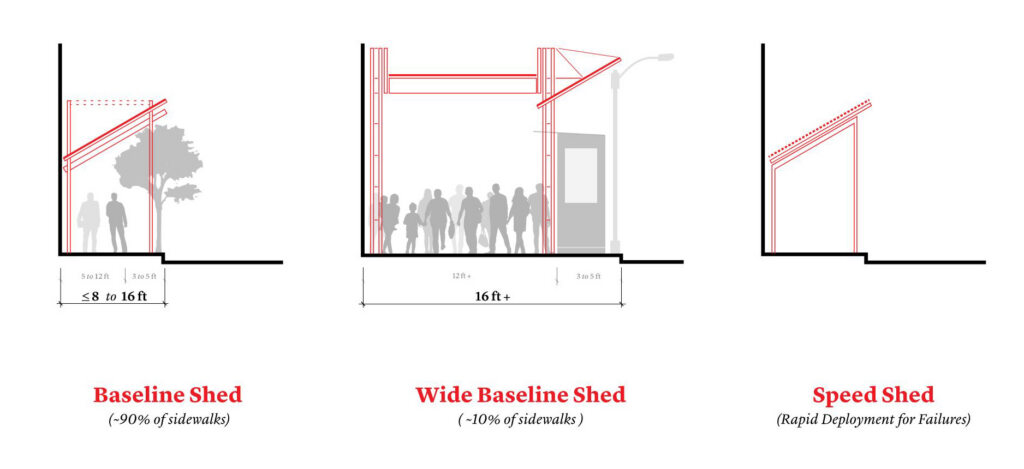
Shed types based on city wide conditions
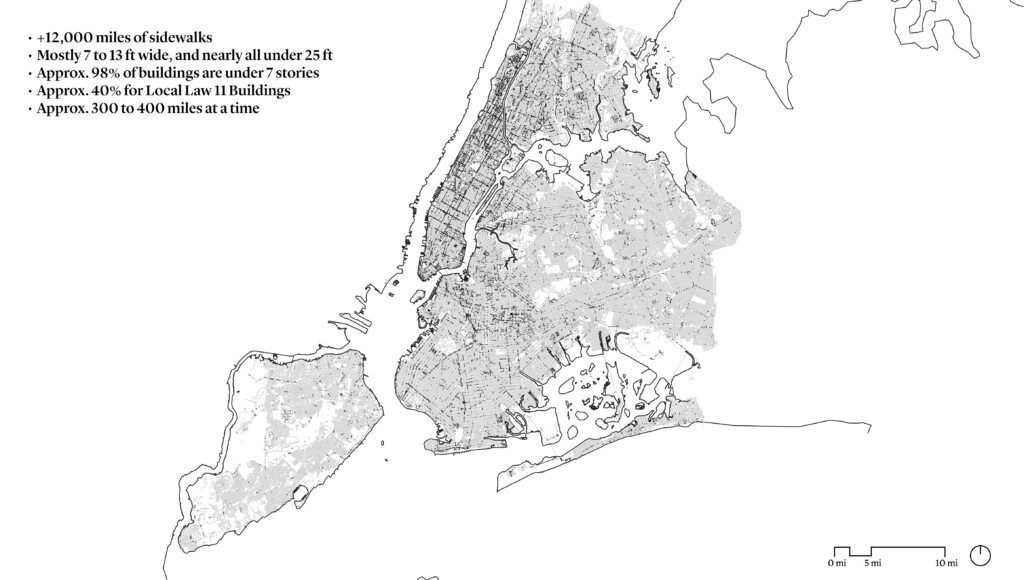
Map showing NYC sidewalks. Wider sidewalks appear in black, narrower ones in gray.
A one-size-fits-all solution would not suffice for a diverse city with sidewalks that vary dramatically in width, building height, density, and use. However, to meet budget constraints, PAU’s designs do propose a standardized “kit of parts.”
Early in the design process, following extensive research and stakeholder input, the team identified a sloped roof approach that eliminates the need for a parapet, opens up the sidewalk to the sky, and discourages climbing – a significant safety issue with existing sheds. While a flat-topped variation will remain available for the rare cases when workers need roof access, the team is exploring ways to easily convert sloped roofs into flat platforms when necessary.
The sloped roof sends rainwater to a gutter at the back of the shed, where a debris screen keeps leaves, litter, and larger items from clogging it. The gutter feeds a downspout, which, depending on site conditions, carries the water to the nearest storm drain. This is a common practice that keeps runoff from pooling or dripping onto passersby, even on existing flat sheds.
Additional strategies to enhance circulation, increase natural light, and improve user experience include replacing solid roofs with netting, removing street-level bracing, expanding post spacing, and eliminating corner columns, which currently impede pedestrian flow and are vulnerable to vehicles. Award-winning architectural lighting firm Fisher Marantz Stone is working with PAU to provide more diffused, less conspicuous lighting alternatives.
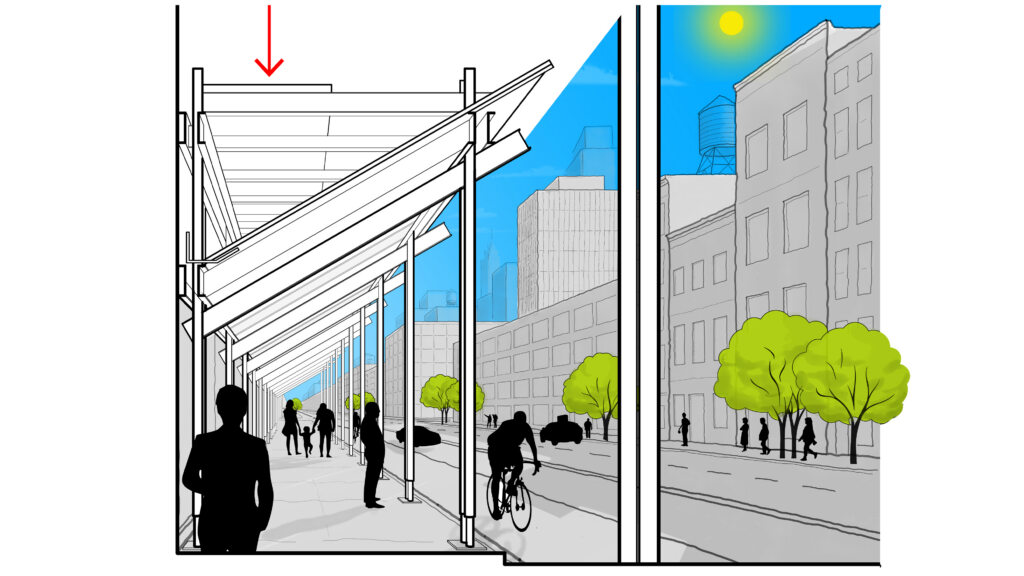
Platforms for drop scaffolding are easily added by extending back posts
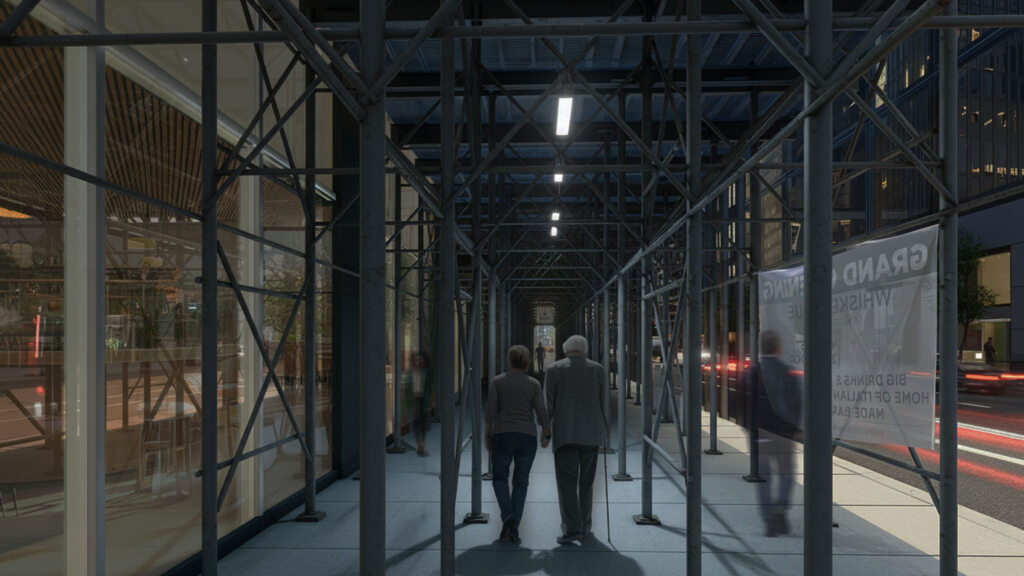
Existing condition
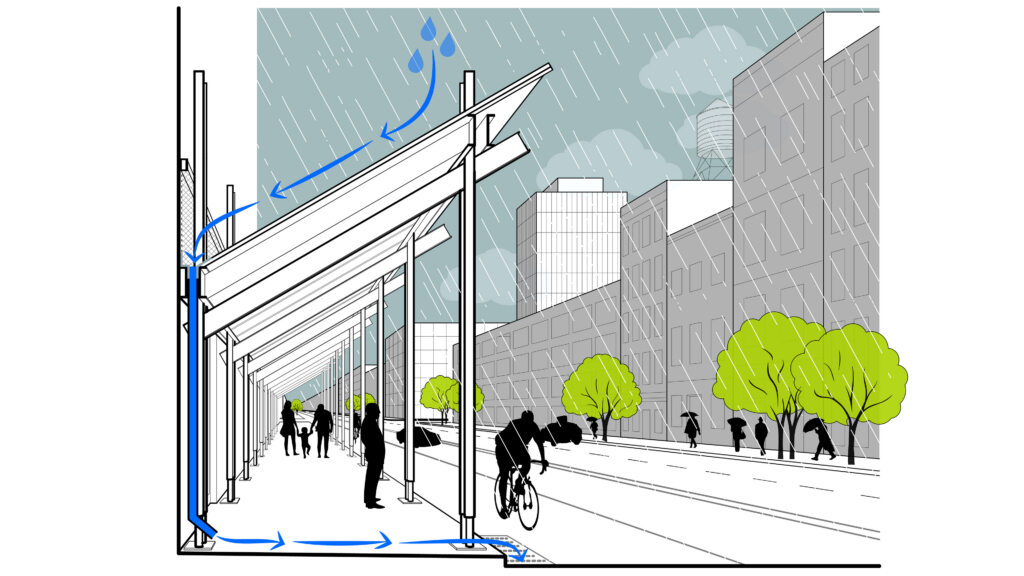
Water drains to a simple gutter at the back of the shed
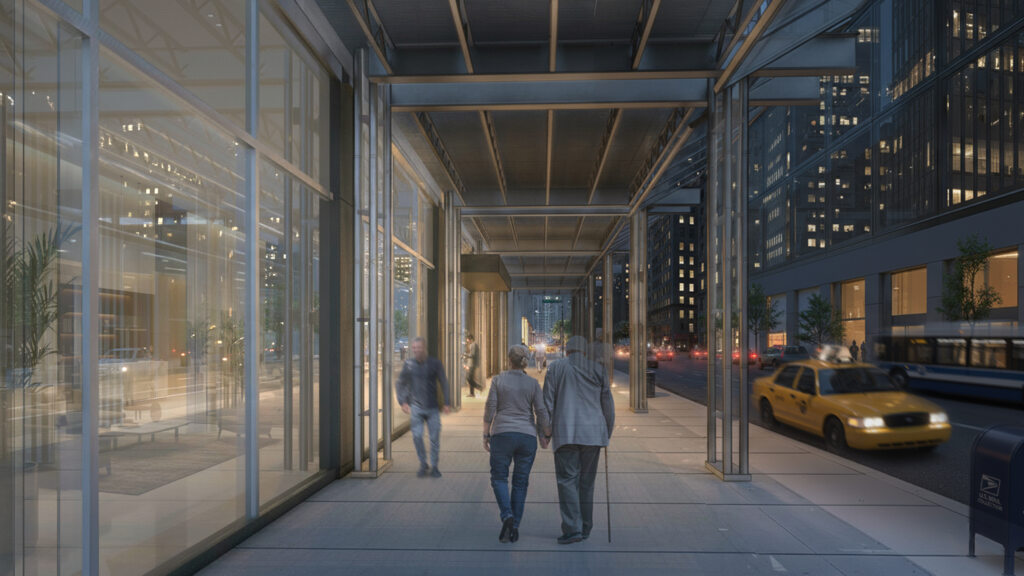
Wide baseline shed after
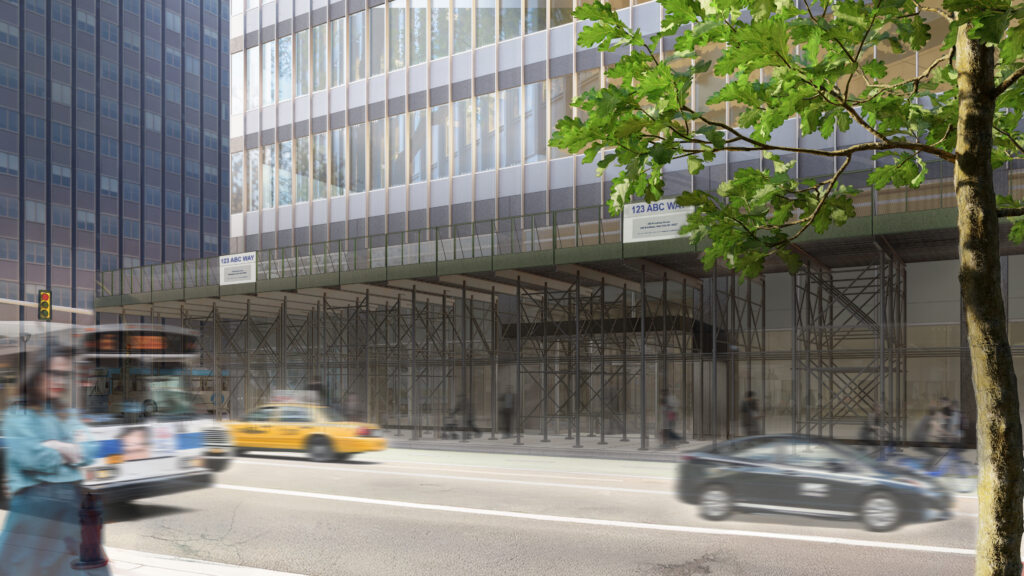
Wide baseline shed
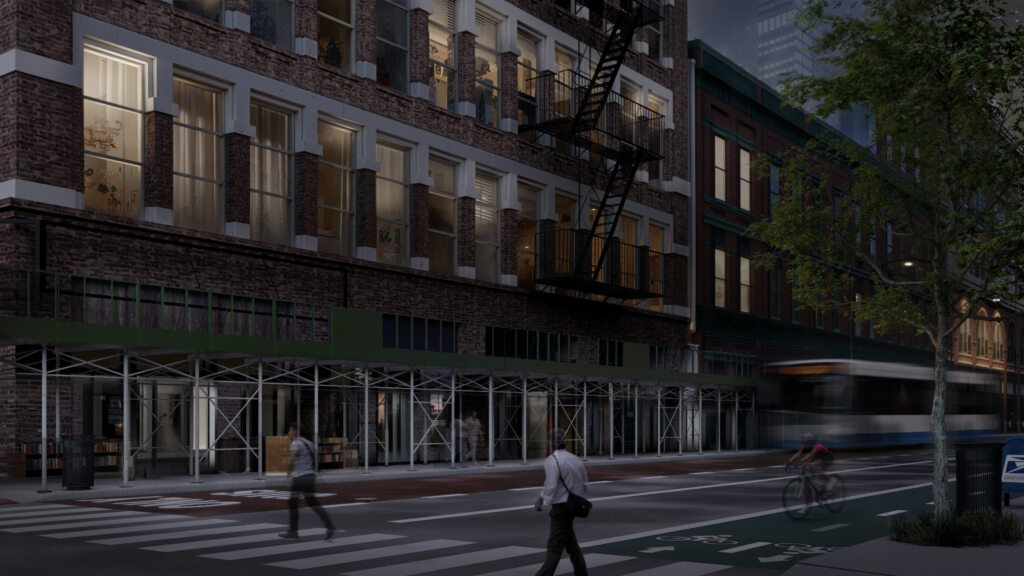
Speed shed
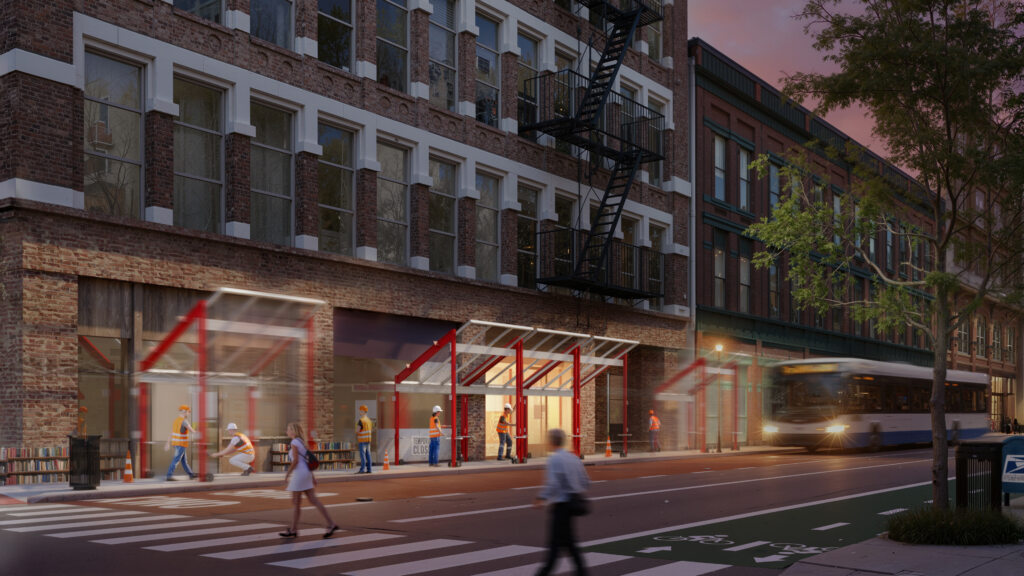
The speed shed is able to be easily relocated for urgent protection
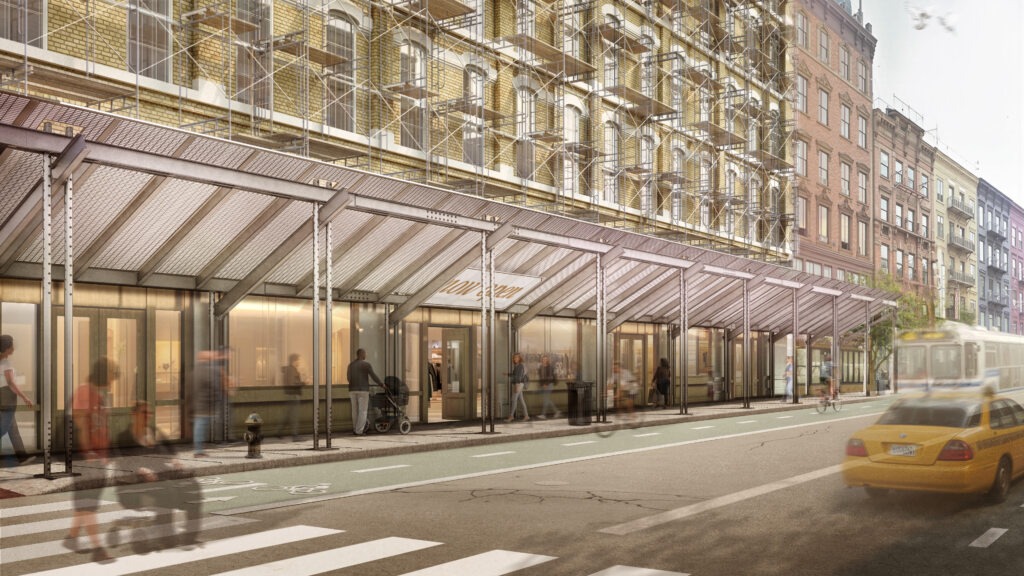
Baseline Shed with a temporary work platform supporting scaffolding.
Collaborators
Structural Engineer: LERA
Code Consultant: Tang Studio
Lighting Design: Fisher Marantz Stone | FMS
Costing: Dharam Consulting
Civil Engineer: Langan
Wind Testing: RWDI